
Venture Capital Singapore: Inside Asia’s Startup Funding Powerhouse
Singapore has steadily positioned itself as one of the most active Venture Capital Singapore hubs in Asia, attracting founders, institutional investors, and global funds seeking exposure to Southeast Asia’s fast-growing digital economy. The venture capital ecosystem in Singapore is shaped by a mix of government-backed initiatives, sovereign wealth funds, private equity firms, and international VC players who use the city-state as a strategic gateway to the wider ASEAN market.
What makes venture capital in Singapore distinct is not just the availability of capital but the structured environment that supports startup formation. Organizations like Enterprise Singapore, along with regulatory oversight from the Monetary Authority of Singapore (MAS), have created a stable and innovation-friendly financial system. At the same time, major investment institutions such as Temasek Holdings and GIC play a significant role in anchoring long-term capital flow into technology, healthcare, and sustainability sectors.
For founders, Singapore offers access to early-stage seed funding, growth capital, and cross-border expansion opportunities. For investors, it provides proximity to high-growth markets like Indonesia, Vietnam, and Malaysia. Understanding how venture capital in Singapore works is essential for anyone aiming to build or invest in scalable startups across Asia.
Venture Capital Singapore Overview
The venture capital landscape in Singapore is structured, highly international, and deeply interconnected with Southeast Asia’s startup ecosystem. Unlike many emerging markets where funding cycles are fragmented, Singapore offers a relatively mature investment pipeline ranging from pre-seed accelerators to late-stage growth equity. This makes it an attractive base for both startups and global venture firms.
The ecosystem is anchored by sovereign wealth funds such as GIC and Temasek Holdings, which invest directly in startups and also fund large VC firms. Alongside them, government-supported initiatives like Startup SG and Enterprise Singapore provide grants, co-investment schemes, and accelerator support to early-stage companies. This dual-layer system of public and private capital creates stability and reduces early-stage funding gaps.
Singapore also benefits from its strong legal framework, tax incentives for startups, and investor-friendly policies regulated by MAS. These conditions encourage international venture capital firms like Sequoia Capital, Accel, and SoftBank Vision Fund to maintain active regional offices in the city-state. As a result, Singapore is not just a funding destination but also a decision-making hub for investments across Southeast Asia.
Why Singapore is a Venture Capital Hub
Singapore’s rise as a venture capital hub is not accidental. It is the result of long-term policy planning, geopolitical positioning, and financial infrastructure development. The country sits at the center of Southeast Asia, a region with more than 600 million people and rapidly expanding digital adoption. This geographic advantage allows VC firms based in Singapore to access multiple emerging markets efficiently.
Another key factor is regulatory stability. The Monetary Authority of Singapore (MAS) has built a reputation for transparent financial governance, which reduces risk perception among global investors. Combined with strong intellectual property laws and ease of doing business, Singapore offers a secure environment for startup investments.
Talent concentration also plays a major role. The country attracts engineers, product managers, and financial analysts from across Asia, supported by universities like the National University of Singapore (NUS) and Nanyang Technological University (NTU). These institutions consistently produce startup founders and deep-tech innovators.
Additionally, Singapore’s sovereign funds like Temasek Holdings and GIC act as anchor investors in major funding rounds, providing confidence to global VCs. This combination of capital depth, talent availability, and regulatory strength makes Singapore one of the most reliable venture capital ecosystems in Asia.
Key Venture Capital Firms in Singapore
Singapore hosts a diverse range of venture capital firms, from early-stage specialists to global growth investors. These firms actively fund startups across fintech, SaaS, healthtech, AI, and climate technology.
Major VC Firms Operating in Singapore
| Venture Capital Firm | Focus Area | Stage |
|---|---|---|
| Sequoia Capital SEA | Tech startups, internet economy | Seed to Growth |
| Golden Gate Ventures | Southeast Asia startups | Early-stage |
| Vertex Ventures | Enterprise, SaaS, deep tech | Seed to Series B |
| Jungle Ventures | Consumer internet, fintech | Early to Growth |
| Monk’s Hill Ventures | Technology startups | Seed to Series A |
| SGInnovate | Deep tech, AI, biotech | Early-stage |
Sequoia Capital has been highly active in Southeast Asia through its regional fund, backing major startups in fintech and e-commerce. Similarly, Vertex Ventures operates with strong backing from Temasek, focusing on scalable enterprise solutions and B2B technologies.
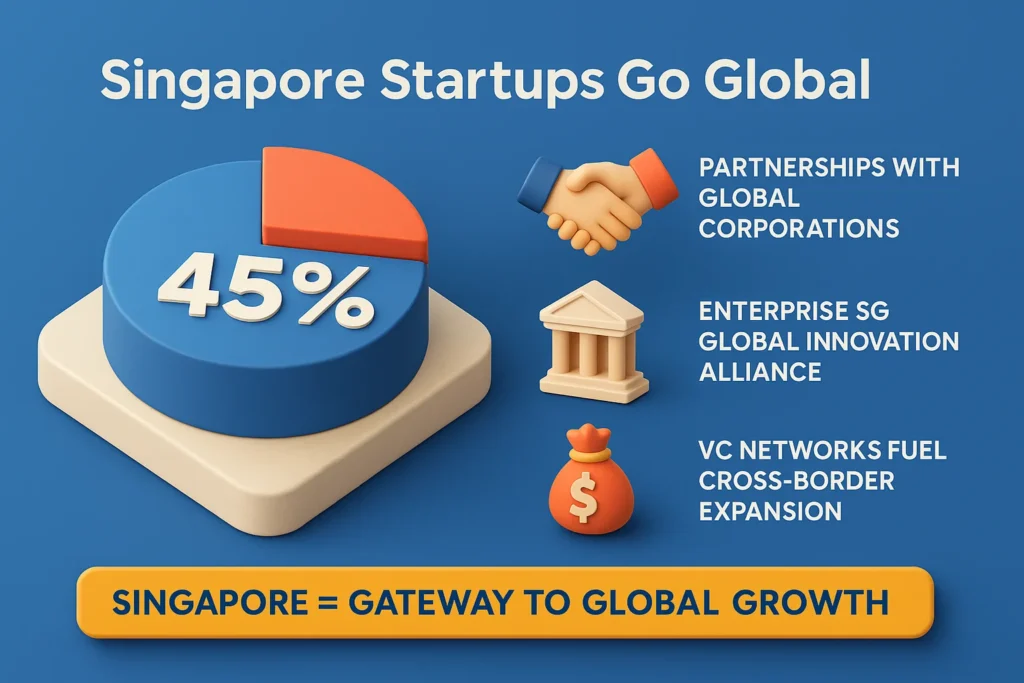
What differentiates Singapore-based VCs is their cross-border investment strategy. Most firms do not limit themselves to local startups but instead target companies with regional expansion potential. This approach aligns with Singapore’s position as a gateway to ASEAN markets.
How Venture Capital Funding Works in Singapore
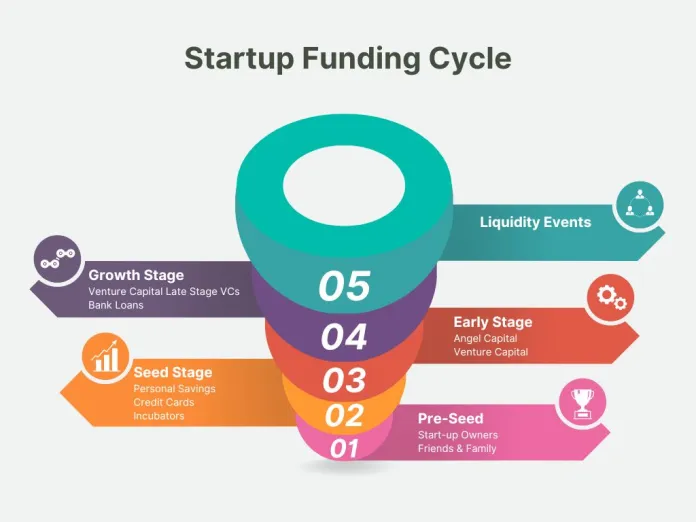
Venture capital funding in Singapore follows a structured lifecycle, typically aligned with global investment stages but adapted for Southeast Asia’s market dynamics. The process usually begins with seed funding, often supported by incubators, angel investors, or government grants. Programs under Enterprise Singapore play a crucial role at this stage by providing co-funding and mentorship.
As startups grow, they move into Series A and Series B rounds, where institutional VCs evaluate scalability, revenue traction, and market expansion potential. At this stage, firms like Golden Gate Ventures and Jungle Ventures become active participants. Later-stage funding often involves sovereign wealth funds such as Temasek Holdings and GIC, which provide large capital injections for regional or global expansion.

Deal structuring in Singapore is generally aligned with international standards, including SAFE notes, convertible instruments, and equity financing. Legal frameworks are well-developed, which reduces friction during negotiations. Startups also benefit from Singapore’s tax incentives and IP protection laws, which improve investor confidence and valuation stability.
Startup Funding Stages in Singapore
Venture capital investment in Singapore typically follows a predictable stage-based structure, though timelines can vary depending on sector and traction.
- Pre-seed Stage: Founders rely on personal savings, accelerators, and government grants.
- Seed Stage: Angel investors and early VC firms validate product-market fit.
- Series A: Focus shifts to scaling revenue and customer acquisition.
- Series B and beyond: Expansion into regional or global markets becomes the priority.
Singapore’s startup ecosystem is particularly strong in fintech, SaaS, and deep tech, where early validation can quickly lead to regional scalability. Government-backed initiatives reduce early failure risk, while private capital ensures growth continuity.
Key Sectors Attracting Venture Capital in Singapore
Venture capital in Singapore is highly sector-driven, with certain industries consistently attracting the majority of funding activity.
- Fintech: Digital banking, payments, blockchain
- Artificial Intelligence: Enterprise automation, generative AI tools
- Climate Tech: Carbon management, renewable energy solutions
- Healthtech: Telemedicine, biotech innovation
- Enterprise SaaS: Cloud infrastructure, workflow automation
Fintech remains the strongest sector due to Singapore’s role as a financial hub in Asia. AI and climate tech are rapidly gaining attention due to global investment trends and government incentives.
How to Raise Venture Capital in Singapore
Startups aiming to raise venture capital in Singapore need to align with investor expectations around scalability, market size, and execution capability. A strong pitch typically includes a validated product, early traction metrics, and a clear regional expansion strategy.

Founders often begin by joining accelerators or pitching at demo days organized by Venture capital firms or government-backed programs. Networking plays a critical role, as many deals originate through warm introductions rather than cold outreach.
Investors in Singapore also place strong emphasis on founder-market fit and cross-border scalability, particularly within ASEAN markets. A startup that demonstrates traction in Indonesia or Vietnam often gains stronger investor interest compared to one focused only on local demand.
Challenges in the Singapore Venture Capital Ecosystem
Despite its strengths, venture capital in Singapore faces several structural challenges. One key issue is high operational cost, which can pressure early-stage startups before they achieve scale. Another challenge is competition for capital, as high-quality startups often receive multiple offers, leading to inflated valuations.
Additionally, while Singapore provides strong local funding, startups still need to expand regionally to achieve significant growth. This creates execution pressure, especially for early-stage founders unfamiliar with cross-border markets.

FAQ: Venture Capital Singapore
1. Why is Singapore attractive for venture capital?
Because of its stable regulations, strong financial infrastructure, sovereign wealth funds, and access to Southeast Asian markets.
2. Which are the top VC firms in Singapore?
Sequoia Capital SEA, Vertex Ventures, Golden Gate Ventures, and Jungle Ventures are among the most active.
3. What sectors get the most VC funding in Singapore?
Fintech, AI, climate tech, healthtech, and enterprise SaaS dominate investment flows.
4. Can foreign startups raise VC in Singapore?
Yes, many VCs actively fund foreign founders if they target Southeast Asian markets.
5. What role does the government play?
Agencies like Enterprise Singapore provide grants, co-investment schemes, and startup support programs.
You may also like



Leave a Reply