
Incorporate Company Singapore: Complete 2026 Guide
Singapore remains one of the world’s most attractive destinations for entrepreneurs and investors. Its business-friendly regulations, transparent legal framework, and competitive tax system make it an ideal place to start and grow a company.
If you plan to incorporate company Singapore, understanding the registration process is essential. Whether you are a local entrepreneur, startup founder, SME owner, or foreign investor, proper planning can help you avoid delays and compliance issues.
This guide explains the requirements, costs, timelines, legal obligations, and practical steps involved in company incorporation. By the end, you will know exactly how to establish a Singapore company confidently and efficiently.
Why Entrepreneurs Choose Singapore for Company Incorporation
Singapore consistently ranks among the easiest places in the world to do business. The government has created a highly efficient environment that supports innovation, investment, and entrepreneurship.
Key advantages include:
- Low corporate tax rates
- Strong legal protection
- Political stability
- Strategic Asian location
- Access to international markets
- Efficient registration procedures
- Excellent banking ecosystem
Many entrepreneurs choose to incorporate company Singapore because a Private Limited Company (Pte Ltd) offers limited liability protection. This means personal assets remain separate from business liabilities.
In addition, Singapore allows 100% foreign ownership, making it highly attractive for international founders seeking a regional business hub.
Singapore Company Registration Requirements
Before you incorporate company Singapore, you must satisfy several legal requirements established by ACRA.
Essential Requirements
You will need:
- At least one shareholder
- At least one resident director
- A company secretary
- A registered local address
- Approved company name
- Initial paid-up capital of at least S$1
- Defined business activities
Choosing a Business Structure
Most founders choose a Private Limited Company because it offers:
- Separate legal identity
- Limited liability
- Greater credibility
- Easier fundraising opportunities
- Tax incentives for eligible companies
For startups and growth-focused businesses, this structure is generally the preferred option.
Step-by-Step Process to Incorporate Company Singapore
The incorporation process is straightforward when all required documents are prepared.
Step 1: Reserve Your Company Name
Choose a unique business name and submit it for approval through ACRA.
The name must:
- Be unique
- Avoid restricted words
- Not infringe trademarks
- Comply with naming regulations
Approval often occurs within hours if no additional review is required.
Step 2: Prepare Company Information
You must provide:
- Director details
- Shareholder information
- Registered address
- Share capital details
- Business activities
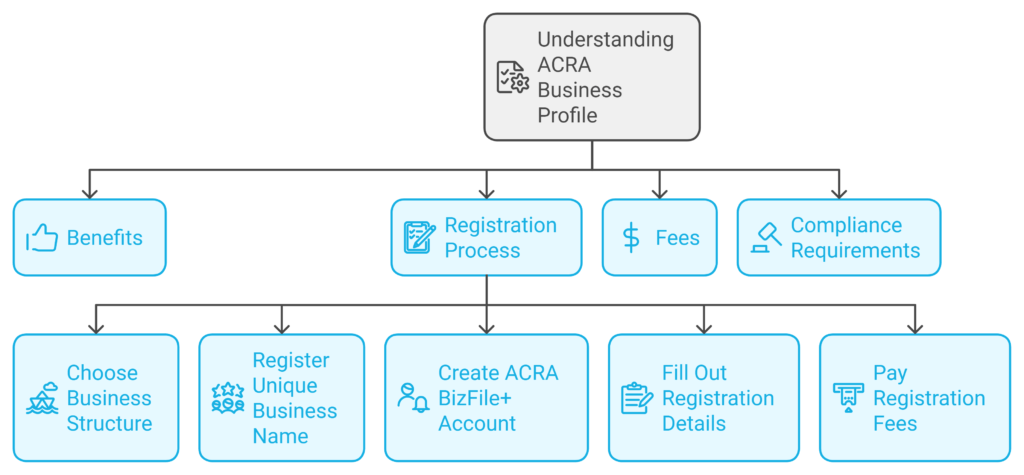
Accurate documentation helps prevent registration delays.
Step 3: Submit Registration Application
Once information is verified, the application is submitted to ACRA through the BizFile+ system.
Many companies receive approval within one to three business days.
Step 4: Receive Incorporation Documents
After approval, you will receive:
- Company registration number (UEN)
- Certificate of Incorporation
- Company business profile
These documents are required for banking and compliance purposes.
Costs Involved in Company Incorporation
Understanding costs helps entrepreneurs budget effectively.
Government Fees
ACRA charges incorporation-related fees, including company name reservation and company registration fees. Current registration costs for a Private Limited Company generally total around S$315.
Professional Service Fees
Many entrepreneurs hire incorporation specialists for assistance.
Services may include:
- Company secretary services
- Registered office address
- Nominee director services
- Compliance support
- Banking assistance
Packages vary significantly depending on provider and requirements.
Additional Startup Costs
You may also need:
- Business licenses
- Accounting software
- Insurance
- Payroll systems
- Tax advisory services
Planning these expenses early can prevent unexpected costs later.
Tax Benefits of Incorporating in Singapore
One major reason businesses choose to incorporate company Singapore is the attractive tax system.
Corporate Tax Advantages
Singapore’s corporate tax framework offers:
- Competitive tax rates
- Startup tax exemptions
- Double taxation agreements
- No capital gains tax in many situations
These advantages help businesses retain more profits for growth.
Tax Compliance Requirements
After incorporation, businesses may need to manage:
- Corporate income tax filings
- GST obligations
- Employee tax reporting
- Annual returns
Maintaining proper records simplifies compliance and reduces risk.
Company Incorporation for Foreign Entrepreneurs
Foreign founders frequently choose Singapore as their regional headquarters.
Can Foreigners Own a Singapore Company?
Yes.
Foreign investors can own 100% of a Singapore company. However, a resident director is generally required.
Important Considerations
Foreign entrepreneurs should prepare:
- Passport copies
- Residential address proof
- Due diligence documents
- Business plans where required
Professional incorporation services often assist with these requirements.
Benefits for International Businesses
Foreign business owners gain:
- Access to Asian markets
- Strong international reputation
- Stable legal environment
- Reliable banking infrastructure
These factors continue to attract global startups and SMEs.
Post-Incorporation Compliance Obligations
Many founders focus on registration but overlook ongoing responsibilities.
Annual Compliance Requirements
After you incorporate company Singapore, you must maintain:
- Annual returns
- Corporate records
- Financial statements
- Tax filings
- Company secretary obligations
Failure to comply can result in penalties.
Business Banking Setup
Opening a corporate bank account is often one of the next priorities.
Banks typically require:
- Incorporation documents
- Director verification
- Business information
- Compliance checks
Preparing documents in advance can speed up the approval process.
Record Keeping
Maintain accurate records for:
- Revenue
- Expenses
- Contracts
- Payroll
- Tax documentation
Good record keeping supports smooth audits and compliance management.
Common Mistakes to Avoid During Company Registration
Entrepreneurs can avoid costly errors by planning carefully.
Common mistakes include:
- Choosing an unsuitable company structure
- Ignoring compliance obligations
- Using incomplete documentation
- Underestimating ongoing costs
- Delaying company secretary appointments
- Neglecting tax planning
Many founders discover that registration is easy, but long-term compliance requires consistent attention.
Before you incorporate company Singapore, create a checklist covering registration, banking, taxation, and compliance responsibilities.
1. How long does it take to incorporate company Singapore?
Most registrations are completed within one to three business days after document submission and approval.
2. Can foreigners incorporate company Singapore?
Yes. Foreign entrepreneurs can own 100% of a Singapore company, subject to regulatory requirements.
3. What is the minimum capital requirement?
A Singapore Private Limited Company can generally be incorporated with a minimum paid-up capital of S$1.
4. Do I need a local director?
Yes. At least one resident director is typically required under Singapore regulations.
5. What happens after incorporation?
You must manage compliance obligations, taxation requirements, bookkeeping, annual filings, and banking arrangements.
Conclusion
Choosing to incorporate company Singapore can provide significant advantages for entrepreneurs, startups, and international investors. The country offers a transparent regulatory environment, attractive tax benefits, strong legal protections, and access to global business opportunities.
While the registration process is relatively straightforward, successful incorporation requires careful preparation. Understanding the legal requirements, incorporation costs, compliance obligations, and banking procedures can help you avoid unnecessary challenges.
Whether you are launching a startup or expanding an existing business, taking the right steps from the beginning creates a strong foundation for long-term growth. Start your incorporation journey today and position your business for success in one of the world’s leading business destinations.
You may also like



Leave a Reply