ACRA Business Registration: Complete Singapore Guide for 2026
Starting a company in Singapore is one of the most efficient ways to enter a thriving business environment. Whether you are a local entrepreneur or an overseas investor, understanding the ACRA Business Registration process is essential before launching your operations.
The Accounting and Corporate Regulatory Authority (ACRA) is the government agency responsible for regulating businesses and companies in Singapore. Every eligible business must complete registration through the BizFile system before commencing operations.
This guide explains the complete registration process, eligibility requirements, business structures, costs, timelines, and post-registration responsibilities. By the end, you will have a clear understanding of how to complete ACRA Business Registration successfully and avoid common mistakes that delay approvals. Information in this guide aligns with current ACRA registration procedures and BizFile requirements.
What Is ACRA Business Registration?
ACRA Business Registration refers to the official process of registering a business entity with Singapore’s Accounting and Corporate Regulatory Authority.
Registration gives your business legal recognition and allows it to operate within Singapore’s regulatory framework. Without registration, most businesses cannot legally conduct commercial activities.
Some of the key purposes of registration include:
- Establishing a legal business identity
- Obtaining a Unique Entity Number (UEN)
- Opening corporate bank accounts
- Signing business contracts
- Hiring employees
- Building credibility with customers and suppliers
Singapore consistently ranks among the easiest places in the world to start a business due to its streamlined registration procedures and digital filing system. Many registrations can be completed quickly when all required information is available.
Business Structures Available in Singapore
Before beginning ACRA Business Registration, you must choose the most suitable business structure.
Sole Proprietorship
A sole proprietorship is owned and controlled by one individual.
Advantages:
- Simple setup
- Lower compliance requirements
- Full control by owner
Disadvantages:
- Unlimited personal liability
- Limited fundraising opportunities
Partnership
A partnership involves two or more owners sharing responsibilities and profits.
Benefits include:
- Shared resources
- Shared expertise
- Easy formation
However, partners generally remain personally liable for business obligations.
Limited Liability Partnership (LLP)
An LLP combines flexibility with liability protection.
Key benefits:
- Separate legal identity
- Limited liability for partners
- Greater business credibility
Private Limited Company (Pte Ltd)
This is the most popular structure for startups and growing businesses.
Advantages include:
- Separate legal entity
- Limited shareholder liability
- Better fundraising opportunities
- Higher credibility among investors
ACRA recommends selecting a structure based on liability exposure, growth objectives, and long-term business plans.
Eligibility Requirements for ACRA Business Registration
Before submitting an application, certain requirements must be satisfied.
For Local Entrepreneurs
Applicants generally need:
- Valid identification
- Approved business name
- Registered business address
- Appropriate business structure
For Foreign Entrepreneurs
Foreign applicants can also establish businesses in Singapore.
Requirements may include:
- Compliance with foreign ownership regulations
- Appointment of required local officers where applicable
- Engagement of a corporate service provider when necessary
Business Name Approval
Every applicant must reserve a business name before proceeding with registration.
The proposed name must:
- Be unique
- Not infringe trademarks
- Not be offensive
- Not closely resemble existing business names
Name approval is a mandatory step before incorporation can proceed.
Step-by-Step ACRA Business Registration Process
The ACRA Business Registration process follows a structured approach.
Step 1: Determine Eligibility
Confirm whether registration is required for your business activities and verify compliance requirements.
Step 2: Select a Business Structure
Choose between:
- Sole Proprietorship
- Partnership
- LLP
- Private Limited Company
Your selection impacts taxation, liability, and future growth opportunities.
Step 3: Reserve Your Business Name
Submit a name application through BizFile.
Once approved, the reservation allows you to proceed with registration.
Step 4: Prepare Required Information
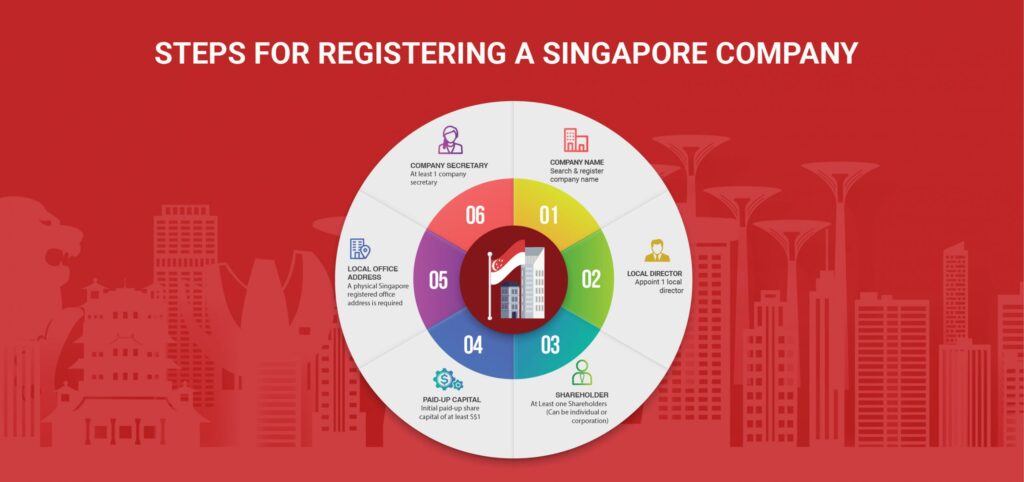
Gather:
- Business address
- Shareholder details
- Director information
- Company secretary details (if applicable)
- Share capital information
Step 5: Submit Registration Application
Log into BizFile and complete the registration process by entering all required information.
Step 6: Pay Registration Fees
After reviewing the application, submit payment through the platform.
Step 7: Receive Confirmation
Upon approval, ACRA issues a Unique Entity Number (UEN) and registration confirmation.
Most applications are processed electronically when submitted correctly.
Documents Required for Registration
The required documents vary depending on the business structure.
Typical documentation includes:
- Identification documents
- Registered address details
- Shareholder information
- Director information
- Company constitution (for companies)
- Contact details
Foreign applicants may need additional supporting documentation depending on their circumstances.
Preparing documentation in advance helps reduce delays and ensures a smoother registration process. According to current BizFile guidance, company details, shareholders, directors, and financial year information are among the core requirements during filing.
Costs and Processing Time
One of Singapore’s major advantages is its efficient registration system.
Typical Costs
Common fees generally include:
- Business name reservation fee
- Incorporation or registration fee
Costs vary depending on the entity type selected.
Processing Time
Most straightforward applications receive approval quickly.
Processing may take longer when:
- Additional approvals are required
- Regulated business activities are involved
- Information is incomplete
- Documents require verification
Many entrepreneurs complete registration within a short period once all details are prepared accurately.
Common Mistakes to Avoid During Registration
Many first-time founders encounter preventable issues during ACRA Business Registration.
Choosing the Wrong Structure
Selecting an unsuitable entity can create future operational and tax challenges.
Always assess:
- Liability exposure
- Funding plans
- Growth objectives
Submitting Incorrect Information
Errors in shareholder, director, or address information may cause delays.
Double-check all details before submission.
Ignoring Future Compliance
Registration is only the beginning.
Business owners must also understand:
- Annual filings
- Corporate governance obligations
- Financial record requirements
Poor Name Selection
A rejected name application can delay the entire process.
Conduct proper checks before applying.
These common issues frequently arise among new founders, especially regarding ongoing compliance obligations after incorporation.
Post-Registration Responsibilities
Completing ACRA Business Registration does not end your obligations.
Businesses must continue meeting regulatory requirements.
Maintain Proper Records
Keep accurate accounting and business records.
Meet Annual Filing Requirements
Depending on your entity type, periodic filings may be required.
Update Company Information
Changes involving:
- Directors
- Shareholders
- Registered address
- Company officers
must be reported when required.
Open a Corporate Bank Account
Most businesses establish a dedicated corporate account to separate personal and business finances.
Monitor Compliance Deadlines
Maintaining compliance helps avoid penalties and preserves business credibility.
Many experienced founders note that ongoing compliance management becomes more important than the initial registration process itself.
Why Singapore Remains a Top Business Destination
Singapore continues attracting entrepreneurs from around the world.
Major advantages include:
Business-Friendly Environment
The country provides clear regulations and efficient registration procedures.
Strong Legal Framework
Businesses operate within a transparent and reliable legal system.
International Connectivity
Singapore serves as a gateway to regional and global markets.
Investor Confidence
Well-regulated corporate structures enhance investor trust.
Digital Registration System
Online registration through BizFile simplifies company formation.
These benefits make Singapore a preferred location for startups, SMEs, and multinational companies alike.
Frequently Asked Questions
1. What is ACRA Business Registration?
It is the official process of registering a business entity with Singapore’s Accounting and Corporate Regulatory Authority before commencing operations.
2. How long does ACRA Business Registration take?
Many applications are processed quickly when submitted correctly, though timelines vary depending on complexity and approvals required.
3. Can foreigners complete ACRA Business Registration?
Yes. Foreign entrepreneurs can establish businesses in Singapore, subject to applicable requirements and business structures.
4. What is the best business structure for startups?
Many startups choose a Private Limited Company because it offers liability protection and greater fundraising opportunities.
5. Is a business name reservation required?
Yes. ACRA requires applicants to reserve and obtain approval for a business name before registration can proceed.
Conclusion
Completing ACRA Business Registration is a crucial step for anyone planning to establish a business in Singapore. From selecting the right business structure to reserving a business name and filing through BizFile, each stage plays an important role in creating a legally compliant business.
Singapore’s efficient registration system, transparent regulations, and business-friendly environment make it an attractive destination for entrepreneurs worldwide. However, success goes beyond registration. Business owners should also understand ongoing compliance obligations, maintain accurate records, and monitor regulatory requirements.
By preparing the necessary information in advance and following the correct registration procedures, entrepreneurs can significantly reduce delays and begin operations with confidence.
If you are planning to launch a new venture, start your ACRA Business Registration process today and build a strong foundation for long-term business growth.
You may also like



Leave a Reply