
Business Entity Singapore: Complete Guide for Entrepreneurs
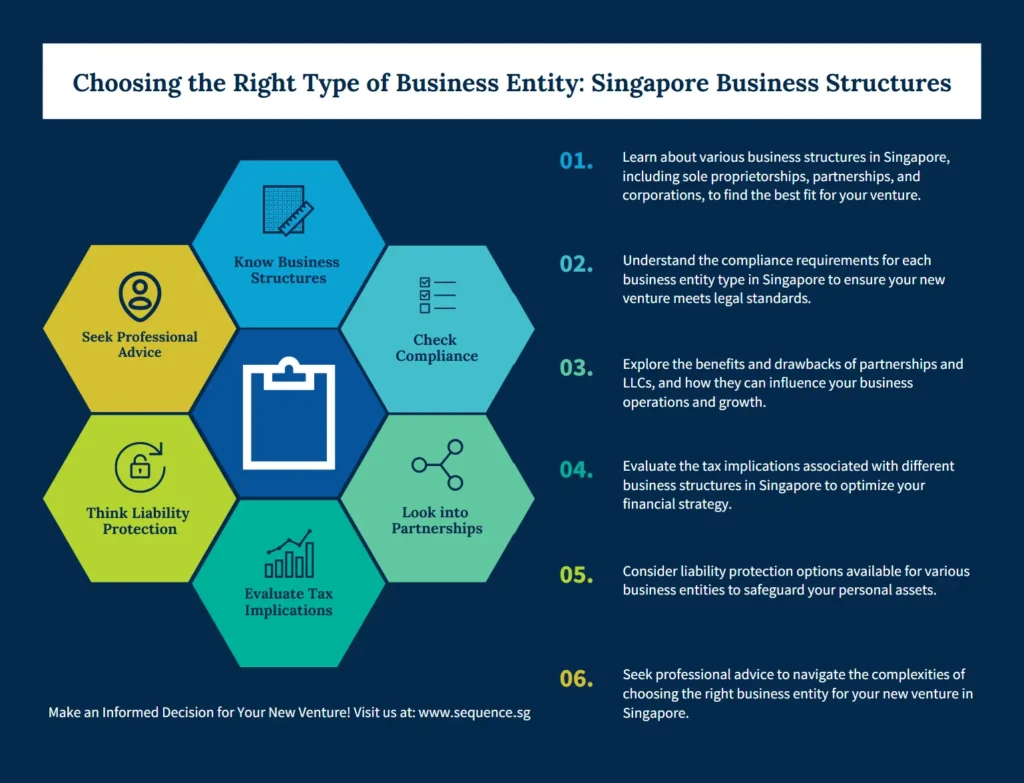
Choosing the right Business Entity Singapore structure is one of the most important decisions an entrepreneur will make. Your business structure affects taxation, liability, compliance requirements, funding opportunities, and long-term growth potential.
Singapore is widely recognized as one of the world’s most business-friendly jurisdictions. However, entrepreneurs must understand the available entity types before registering a company or business.
This guide explains the different business structures available in Singapore, their advantages and disadvantages, registration requirements, and how to select the most suitable option. Whether you are a local entrepreneur, startup founder, SME owner, or foreign investor, this article will help you make an informed decision.
Why Choosing the Right Business Structure Matters
Selecting the appropriate Business Entity Singapore framework impacts nearly every aspect of operations.
A suitable structure can:
- Protect personal assets
- Improve business credibility
- Simplify compliance requirements
- Support fundraising efforts
- Optimize tax efficiency
- Enable long-term expansion
On the other hand, choosing the wrong structure can create unnecessary legal, tax, and administrative challenges.
Therefore, understanding the available options before registration is essential.
Types of Business Entities in Singapore
Singapore offers several legal structures for businesses. Each serves different objectives and risk profiles. According to ACRA, the main registered entity categories include sole proprietorships, partnerships, limited partnerships, limited liability partnerships, and companies.
Sole Proprietorship
A sole proprietorship is the simplest Business Entity Singapore option.
It is owned and operated by one individual. Legally, the owner and business are considered the same entity.
Advantages
- Easy registration process
- Low setup costs
- Full control over decisions
- Minimal administrative requirements
Disadvantages
- Unlimited personal liability
- Limited fundraising opportunities
- Lower business continuity
- Reduced investor confidence
This structure works best for freelancers, consultants, and small businesses with limited operational risk.
Partnership
A partnership consists of two or more individuals operating a business together.
Partners share responsibilities, profits, and liabilities according to their agreement.
Advantages
- Shared capital contributions
- Combined expertise
- Simple setup process
Disadvantages
- Unlimited liability for partners
- Potential disputes among owners
- Shared responsibility for debts
Partnerships are suitable for family businesses and small professional ventures.
Limited Partnership (LP)
A Limited Partnership includes:
- General partners
- Limited partners
General partners manage operations and assume unlimited liability. Limited partners contribute capital and enjoy limited liability protection.
This structure is often used for investment-related activities.
Limited Liability Partnership (LLP)
An LLP combines partnership flexibility with liability protection.
Partners are generally not personally responsible for the negligence or misconduct of other partners.
Benefits
- Separate legal identity
- Limited liability protection
- Flexible management structure
- Suitable for professional services
Consulting firms, accounting practices, and legal partnerships frequently choose LLPs.
Private Limited Company Registration in Singapore
A private limited company is widely considered the most scalable Business Entity Singapore option.
A company exists as a separate legal entity from its shareholders and directors. This distinction provides significant legal and financial advantages.
Key Benefits
- Limited shareholder liability
- Greater credibility
- Easier access to investors
- Business continuity
- Potential tax advantages
Basic Requirements
To register a private limited company, entrepreneurs generally need:
- Approved company name
- At least one shareholder
- At least one director
- Registered local address
- Company secretary
- Initial share capital
Many startups and growth-focused businesses select this structure because it supports expansion and investment opportunities.
When a Private Limited Company Makes Sense
A company structure is often ideal if you plan to:
- Hire employees
- Raise investment capital
- Build a scalable brand
- Expand internationally
- Separate personal and business liabilities
For ambitious founders, this Business Entity Singapore model often delivers the greatest long-term flexibility.
Business Registration Process in Singapore
Step 1: Select a Business Structure
Start by determining which structure aligns with your goals, risk tolerance, and growth plans.
Step 2: Reserve a Business Name
The proposed name must comply with Singapore’s naming guidelines and receive approval before registration.
Step 3: Prepare Required Documents
Requirements vary depending on the entity type.
Typical documents include:
- Identification documents
- Registered address details
- Shareholder information
- Director information
- Business activity description
Step 4: Submit Registration Application
Applications are submitted through Singapore’s business registration system.
Step 5: Obtain Licenses if Required
Certain industries require additional approvals before commencing operations.
Examples include:
- Food businesses
- Financial services
- Education providers
- Healthcare organizations
Foreign Entrepreneurs and Business Ownership
Singapore attracts founders from around the world.
Foreign entrepreneurs can establish a Business Entity Singapore structure, although additional requirements may apply depending on residency status and entity type.
Benefits for Foreign Founders
- Strong legal framework
- Transparent regulations
- International reputation
- Access to regional markets
- Stable political environment
Important Considerations
Foreign owners should evaluate:
- Immigration requirements
- Local director requirements
- Tax obligations
- Banking procedures
- Compliance responsibilities
Professional guidance can help streamline the setup process and avoid delays.
Taxation and Compliance Requirements
Business owners should understand ongoing responsibilities after registration.
Many entrepreneurs focus on incorporation but overlook post-registration obligations. Community discussions and founder experiences consistently highlight compliance as a major challenge after setup.
Annual Compliance Obligations
Depending on the entity type, businesses may need to:
- Maintain accounting records
- File annual returns
- Submit tax filings
- Update business information
- Conduct required meetings
Corporate Tax Advantages
Singapore’s business environment remains attractive because of its competitive tax system.
Benefits may include:
- Startup tax incentives
- Tax treaty network
- Capital gains advantages
- International tax efficiency
Business owners should seek professional tax advice for entity-specific planning.
Common Compliance Mistakes
Avoid these frequent errors:
- Missing filing deadlines
- Poor bookkeeping practices
- Incomplete corporate records
- Delayed tax submissions
- Failure to update company information
Strong compliance practices reduce risk and support sustainable growth.
How to Choose the Best Business Structure
The ideal Business Entity Singapore option depends on your objectives.
Consider the following factors before making a decision.
Liability Protection
Ask yourself:
- Can the business face legal claims?
- Will significant contracts be involved?
- Are personal assets at risk?
Higher-risk businesses typically benefit from stronger liability protection.
Growth Ambitions
Evaluate future plans.
Questions to consider include:
- Will you seek investors?
- Do you plan international expansion?
- Will the workforce grow rapidly?
Businesses targeting scale often prefer a private limited company.
Funding Requirements
Investors generally favor structures with clear governance and ownership frameworks.
Therefore, companies tend to attract investment more easily than sole proprietorships.
Administrative Complexity
Some structures require more compliance than others.
Balance administrative effort against long-term benefits.
Cost Considerations
Compare:
- Registration expenses
- Annual compliance costs
- Professional service fees
- Reporting obligations
The lowest-cost option is not always the most effective choice.
Frequently Asked Questions
1. What is a Business Entity Singapore structure?
A Business Entity Singapore structure refers to the legal form under which a business operates, such as a sole proprietorship, partnership, LLP, or private limited company.
2. Which business entity is best for startups?
Most growth-oriented startups choose a private limited company because it offers limited liability, credibility, and investment opportunities.
3. Can foreigners register a business in Singapore?
Yes. Foreign entrepreneurs can establish businesses in Singapore, although specific requirements and regulatory obligations may apply.
4. What is the difference between an LLP and a company?
An LLP combines partnership flexibility with liability protection, while a company operates as a separate legal entity with shareholders and directors.
5. How long does business registration take?
Registration timelines vary depending on approvals, documentation, and regulatory requirements. Many straightforward applications are processed efficiently through Singapore’s registration system.
Conclusion
Selecting the right Business Entity Singapore structure lays the foundation for future success. The decision influences liability protection, taxation, compliance responsibilities, fundraising opportunities, and long-term growth.
Entrepreneurs should carefully assess their goals, budget, risk exposure, and expansion plans before making a choice. While sole proprietorships and partnerships offer simplicity, LLPs and private limited companies often provide stronger protection and greater scalability.
Singapore continues to attract entrepreneurs because of its efficient regulatory framework, pro-business environment, and strong international reputation. By understanding the available options and aligning them with your business objectives, you can build a stronger foundation for sustainable growth.
Take time to evaluate your needs, seek professional advice where necessary, and choose the structure that supports your long-term vision.
You may also like



Leave a Reply