
Private Limited Singapore: Complete Guide to Registration
A Private Limited Singapore company, commonly known as a Pte Ltd company, is the most popular business structure for entrepreneurs, startups, and growing businesses. Singapore has built a strong reputation as one of the world’s most business-friendly economies, making it an attractive destination for local and foreign investors alike.
Choosing a Private Limited Singapore structure offers legal protection, tax benefits, credibility, and growth opportunities that many other business entities cannot provide. Whether you are launching a startup, expanding internationally, or establishing a regional headquarters, understanding how this structure works is essential.
This guide explains everything you need to know, including incorporation requirements, registration steps, tax considerations, compliance obligations, and benefits for foreign entrepreneurs.
What Is a Private Limited Company in Singapore?
A Private Limited Singapore company is a separate legal entity registered with Singapore’s regulatory authority. It exists independently from its shareholders and directors, allowing the business to own assets, enter contracts, and incur liabilities in its own name.
Unlike sole proprietorships and partnerships, shareholders enjoy limited liability protection. This means their personal assets remain protected if the company faces financial difficulties.
Key characteristics include:
- Separate legal identity
- Limited liability for shareholders
- Up to 50 shareholders
- Ability to raise investment capital
- Perpetual succession
- Enhanced business credibility
Because of these advantages, the Private Limited Singapore model remains the preferred choice for startups, SMEs, and foreign-owned companies.
Benefits of Choosing a Private Limited Singapore Structure
Businesses often choose a Private Limited Singapore company because of the significant legal and financial advantages it provides.
Limited Liability Protection
Shareholders are only liable up to the amount invested in the company. Personal assets are generally protected from company debts and obligations.
Greater Business Credibility
Suppliers, customers, investors, and financial institutions often view incorporated companies as more trustworthy and professional.
Easier Access to Funding
Investors usually prefer investing in companies with a share-based ownership structure. This makes fundraising and expansion easier.
Tax Advantages
Singapore offers attractive corporate tax rates and various tax incentives for qualifying businesses. Many startups benefit from tax exemption schemes during their early years.
Business Continuity
The company continues to exist even when shareholders or directors change. This stability supports long-term growth.
Company Registration Requirements
Before incorporating a Private Limited Singapore company, certain requirements must be fulfilled.
Essential Requirements
A company must have:
- At least one shareholder
- At least one resident director
- One company secretary
- A registered Singapore address
- Minimum paid-up capital of S$1
These requirements apply to both local and foreign-owned businesses.
Shareholders
A company can have between one and fifty shareholders. Both individuals and corporate entities may hold shares.
Directors
At least one director must ordinarily reside in Singapore. Additional directors can be local or foreign residents.
Company Secretary
A qualified company secretary must generally be appointed within the required regulatory timeframe following incorporation.
Step-by-Step Company Incorporation Process
Registering a Private Limited Singapore company is relatively straightforward when all documents are prepared in advance.
Step 1: Reserve a Company Name
Select a unique business name that complies with local regulations. Approval is usually quick unless the name requires additional review.
Step 2: Prepare Company Details
Gather information regarding:
- Directors
- Shareholders
- Company activities
- Registered address
- Share capital
Step 3: Prepare Incorporation Documents
Required documents generally include:
- Identification documents
- Residential addresses
- Corporate information (if applicable)
- Company constitution
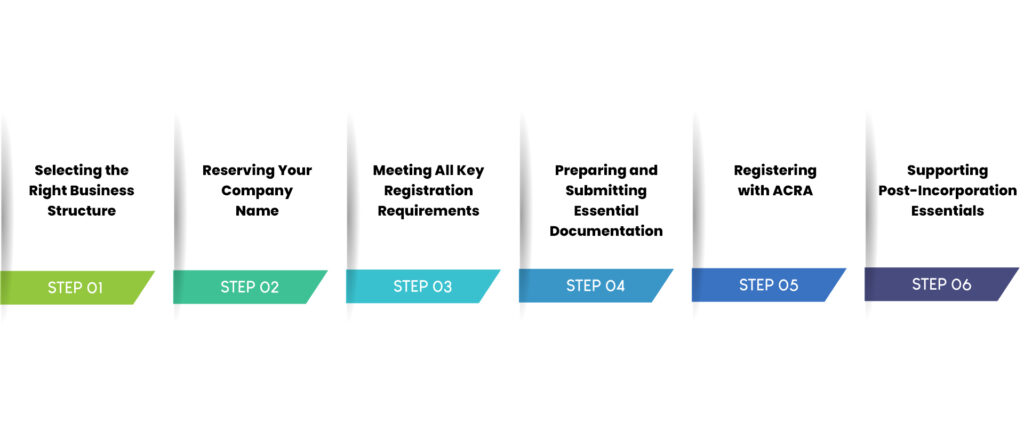
Step 4: Submit Registration Application
The application is submitted through Singapore’s business registration system. Most straightforward applications receive approval within a few business days.
Step 5: Receive Incorporation Approval
Upon approval, the company receives its registration details and official business identification number.
Step 6: Complete Post-Incorporation Tasks
Important next steps include:
- Opening a corporate bank account
- Setting up accounting systems
- Obtaining necessary business licenses
- Registering for applicable taxes
Private Limited Singapore for Foreign Entrepreneurs
Singapore actively welcomes foreign investment, making it a preferred destination for international business owners.
Foreigners may own 100% of a Private Limited Singapore company without requiring a local shareholder. However, at least one resident director is generally required.
Benefits for foreign entrepreneurs include:
- Full foreign ownership
- Strong legal protection
- Political stability
- Strategic Asian market access
- International banking facilities
- Attractive tax environment
Many foreign founders establish regional headquarters in Singapore due to its global reputation and business-friendly regulations.
Corporate Tax Advantages in Singapore
One reason many entrepreneurs choose a Private Limited Singapore company is the country’s competitive tax framework.
Singapore’s corporate tax rate remains among the most attractive in developed economies. Qualifying companies may also benefit from startup tax exemptions and other government support programs.
Potential advantages include:
- Competitive corporate tax rates
- Startup tax exemption schemes
- No capital gains tax
- Extensive tax treaty network
- Transparent tax administration
These benefits help businesses retain profits and reinvest in growth opportunities.
Compliance and Regulatory Obligations
After incorporation, every Private Limited Singapore company must meet ongoing compliance requirements.
Annual Filing Requirements
Companies are generally required to:
- Maintain statutory registers
- Hold annual meetings where applicable
- File annual returns
- Prepare financial statements
Accounting Obligations
Proper bookkeeping records must be maintained throughout the financial year.
Tax Compliance
Businesses must submit required tax filings and comply with applicable tax regulations.
Corporate Governance
Directors must fulfill fiduciary duties and ensure the company operates in accordance with Singapore law.
Maintaining compliance helps avoid penalties and supports long-term business success.
Common Mistakes to Avoid During Registration
Many new entrepreneurs encounter avoidable issues during incorporation.
Common mistakes include:
- Choosing an unsuitable business structure
- Using an unavailable company name
- Failing to appoint required officers
- Ignoring compliance obligations
- Underestimating operating costs
- Delaying tax registrations
Careful planning helps streamline the registration process and reduces future complications.
Why Startups Prefer Private Limited Companies
The startup ecosystem strongly favors the Private Limited Singapore structure because it supports rapid growth and fundraising.
Key startup advantages include:
- Investor-friendly ownership structure
- Flexible share issuance
- Limited liability protection
- Professional corporate image
- Eligibility for grants and incentives
- Scalability for future expansion
As a result, many venture-backed companies begin as private limited companies from day one.
Frequently Asked Questions
1. What is a Private Limited Singapore company?
A Private Limited Singapore company is a separate legal entity that protects shareholders through limited liability while providing tax and business advantages.
2. Can foreigners own a Private Limited Singapore company?
Yes. Foreign entrepreneurs can own 100% of the shares, although at least one resident director is generally required.
3. How many shareholders can a private limited company have?
A private limited company may have between one and fifty shareholders.
4. What is the minimum capital requirement?
The minimum paid-up capital requirement is typically S$1.
5. Why is the Private Limited Singapore structure so popular?
It offers limited liability, business credibility, tax advantages, fundraising opportunities, and long-term scalability.
Conclusion
A Private Limited Singapore company remains the preferred business structure for entrepreneurs, startups, SMEs, and international investors. Its combination of limited liability protection, tax efficiency, credibility, and growth potential makes it one of the most attractive incorporation options available.
Whether you are a local founder launching your first venture or a foreign entrepreneur entering the Asian market, understanding the registration requirements and compliance obligations is essential. By choosing the right structure from the beginning, you can establish a strong foundation for future success.
Take time to evaluate your business goals, prepare the necessary documentation, and ensure compliance with regulatory requirements. Doing so will help you maximize the benefits that a Private Limited Singapore company can offer while positioning your business for sustainable growth.
You may also like



Leave a Reply