
Open Company Singapore: Complete Guide for 2026
Singapore remains one of the world’s most attractive business destinations for entrepreneurs, startups, and international investors. If you plan to Open Company Singapore, you can benefit from a transparent legal system, competitive tax rates, strong banking infrastructure, and a strategic location in Asia.
The registration process is relatively straightforward compared to many other countries. However, understanding the requirements, business structures, compliance obligations, and registration procedures is essential before getting started.
In this guide, you will learn everything about how to Open Company Singapore, including legal requirements, registration steps, costs, tax considerations, banking setup, and ongoing compliance obligations.
Why Singapore Is a Leading Business Destination
Singapore consistently attracts entrepreneurs from around the world because of its business-friendly environment.
Some key advantages include:
- Strong economy
- Stable political environment
- Efficient company registration process
- Low corporate tax rates
- Access to international markets
- Advanced banking system
- Strong intellectual property protection
Many multinational corporations use Singapore as their regional headquarters for Asia-Pacific operations.
For startups, the country offers excellent opportunities to access investors, accelerators, and innovation programs.
As a result, many founders choose to Open Company Singapore when expanding internationally.
Understanding Singapore Business Structures
Before you Open Company Singapore, you must choose the appropriate business structure.
Private Limited Company (Pte Ltd)
This is the most popular business structure.
Benefits include:
- Separate legal entity
- Limited liability protection
- Easier fundraising opportunities
- Better business credibility
- Tax incentives for eligible startups
Most entrepreneurs choose a Private Limited Company because it provides flexibility and growth potential.
Sole Proprietorship
A sole proprietorship is suitable for small businesses operated by a single owner.
However:
- Personal assets are not protected
- Business liabilities become personal liabilities
- Funding options may be limited
Limited Liability Partnership (LLP)
An LLP combines partnership flexibility with limited liability protection.
This structure is commonly used by:
- Consultants
- Lawyers
- Accountants
- Professional service firms
Selecting the right structure is a critical first step when planning to Open Company Singapore.
Company Registration Requirements in Singapore
Several legal requirements must be fulfilled before registration.
Company Name Approval
The proposed business name must:
- Be unique
- Not infringe trademarks
- Not contain restricted terms
- Receive approval from ACRA
Name approval is usually completed quickly if no additional review is required.
Directors and Shareholders
Requirements generally include:
- At least one director
- Minimum one shareholder
- Shareholders can be local or foreign individuals
- Corporate shareholders are permitted
Foreign investors can own 100% of a Singapore company.
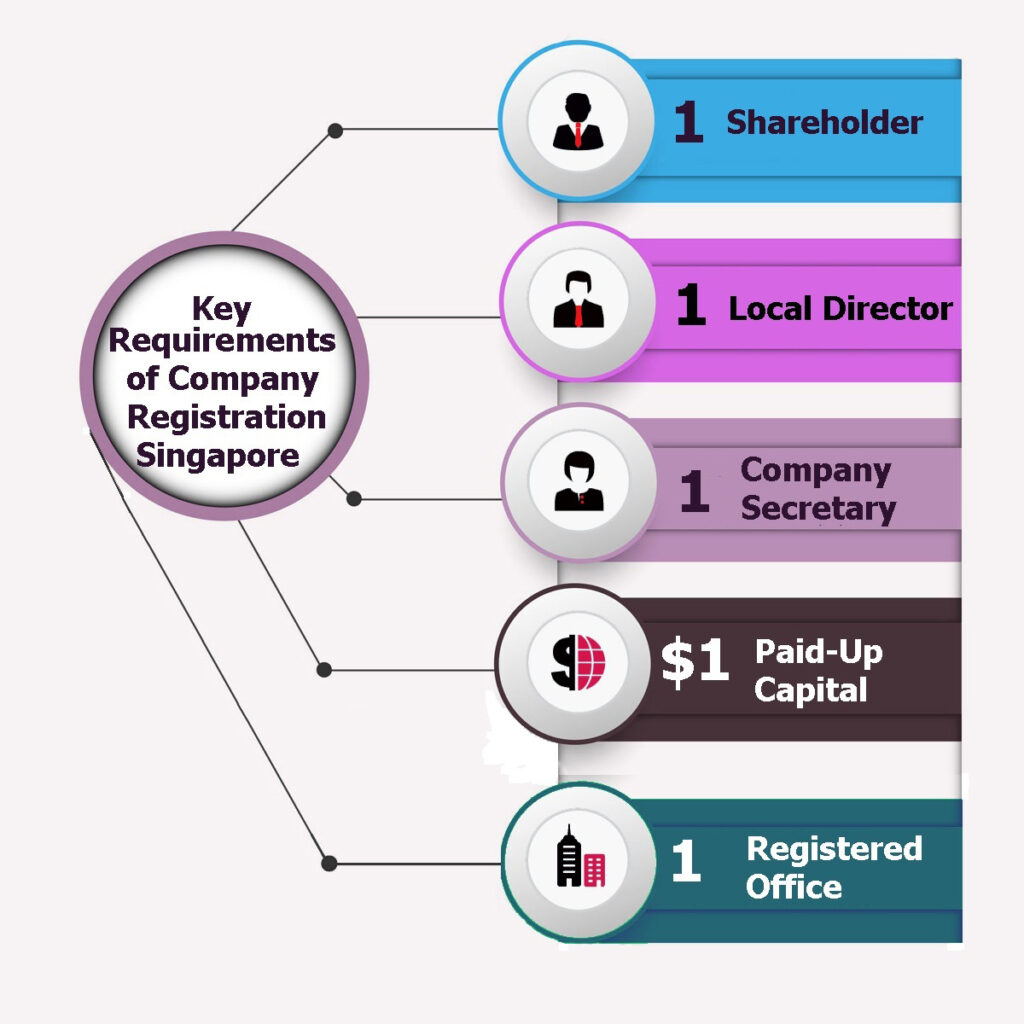
Registered Address
Every company must maintain a local Singapore business address.
The address is used for:
- Government correspondence
- Regulatory notices
- Official company records
Company Secretary
A company secretary must be appointed within the required timeframe after incorporation.
The secretary helps ensure compliance with corporate regulations and filing obligations.
Step-by-Step Process to Open Company Singapore
Understanding the registration process helps avoid delays and compliance issues.
Step 1: Choose Your Business Name
Start by selecting a unique and compliant company name.
Conduct a name availability search before submitting your application.
Step 2: Prepare Incorporation Documents
Typical documents include:
- Identification documents
- Shareholder information
- Director details
- Registered address information
- Company constitution
Proper preparation speeds up approval.
Step 3: Submit Registration Through ACRA
Applications are submitted electronically through ACRA’s BizFile platform.
Most standard registrations receive approval quickly if all information is complete.
Step 4: Receive Incorporation Confirmation
Once approved, the company receives:
- Unique Entity Number (UEN)
- Official registration records
- Incorporation confirmation
The business can then begin operating legally.
Step 5: Open a Corporate Bank Account
After incorporation, businesses usually establish a corporate bank account.
Banks may request:
- Company profile
- UEN information
- Shareholder documents
- Director identification
This step is essential for operational readiness.
Costs Involved in Company Registration
Understanding costs helps with budgeting.
Government Fees
Government registration fees are generally affordable compared with many international jurisdictions.
Professional Service Fees
Many entrepreneurs use professional incorporation services for:
- Registration assistance
- Nominee director services
- Corporate secretarial support
- Compliance management
Costs vary depending on the service package selected.
Ongoing Business Expenses
Common recurring costs include:
- Corporate secretary services
- Accounting services
- Annual filings
- Registered office services
- Tax compliance support
When planning to Open Company Singapore, it is important to consider both setup and ongoing costs.
Tax Benefits for Singapore Companies
One major reason entrepreneurs choose to Open Company Singapore is the attractive tax environment.
Corporate Tax Advantages
Singapore offers:
- Competitive corporate tax rates
- Tax exemptions for qualifying startups
- Extensive treaty network
- No capital gains tax in many situations
These benefits help businesses improve profitability and support long-term growth.
Startup Tax Incentives
Eligible startups may receive significant tax exemptions during their initial years of operation.
These incentives help reduce financial pressure during early growth stages.
International Business Benefits
Singapore’s extensive tax treaty network helps companies avoid double taxation in many international transactions.
This makes Singapore especially attractive for global entrepreneurs.
Business Banking and Financial Setup
A strong banking system is another reason businesses choose Singapore.
Choosing a Business Bank
When comparing banks, consider:
- Online banking capabilities
- International transfer fees
- Multi-currency accounts
- Business lending options
- Customer support
Preparing Banking Documents
Banks typically conduct due diligence reviews.
Having organized documentation can significantly reduce approval times.
Financial Management Best Practices
After incorporation:
- Maintain separate business finances
- Track expenses carefully
- Use accounting software
- Prepare for annual reporting requirements
Good financial management supports compliance and business growth.
Compliance Requirements After Incorporation
Many entrepreneurs focus on registration but overlook ongoing obligations.
Annual Filing Obligations
Companies generally need to maintain compliance through:
- Annual returns
- Corporate records
- Regulatory filings
- Financial reporting
Missing deadlines can lead to penalties.
Accounting and Record Keeping
Maintain accurate records for:
- Revenue
- Expenses
- Contracts
- Payroll
- Tax reporting
Good record keeping simplifies future compliance.
Tax Compliance
Businesses must understand obligations related to:
- Corporate income tax
- Goods and Services Tax (GST), where applicable
- Employee-related obligations
Staying compliant helps avoid regulatory issues.
Tips for Foreign Entrepreneurs
Foreign founders frequently choose to Open Company Singapore because of the country’s international business reputation.
Consider these practical tips:
Understand Residency Requirements
Certain corporate roles require local presence requirements to be satisfied.
Plan Banking Early
Bank account approval can sometimes take longer than incorporation.
Prepare documentation in advance.
Use Professional Assistance
Professional service providers can help with:
- Registration
- Compliance
- Secretarial services
- Banking introductions
Think Long-Term
Consider future requirements such as:
- Hiring employees
- Expanding internationally
- Raising investment capital
- Tax planning
Strategic planning creates a stronger foundation for growth.
Frequently Asked Questions
How long does it take to Open Company Singapore?
Many standard registrations can be completed within a few business days if documentation is complete and approvals are straightforward.
Can foreigners own 100% of a Singapore company?
Yes. Foreign entrepreneurs can fully own a Singapore company, making it an attractive jurisdiction for international business owners.
What is the most common company structure?
The Private Limited Company (Pte Ltd) is the most widely used structure because it offers liability protection and growth opportunities.
Is a business bank account required?
Yes. A corporate bank account is typically necessary for receiving payments, managing expenses, and maintaining proper financial separation.
Are there ongoing compliance obligations?
Yes. Companies must maintain annual filings, accounting records, tax compliance, and other regulatory requirements after incorporation.
Conclusion
Choosing to Open Company Singapore can be one of the smartest decisions for entrepreneurs seeking growth, international expansion, and a stable business environment. Singapore offers efficient registration procedures, strong legal protections, attractive tax policies, and access to global markets.
Success, however, depends on more than simply registering a company. Entrepreneurs must select the right business structure, comply with regulatory requirements, maintain proper records, and develop a long-term growth strategy.
Whether you are a local founder, startup owner, or international investor, understanding the complete incorporation process will help you make informed decisions and avoid unnecessary challenges. Start planning today and take the first step toward building a successful business presence in Singapore.
You may also like



Leave a Reply