
SAP Secondary Schools Singapore: 15 Powerful Benefits and 7 Challenges
Choosing a sap secondary schools Singapore is one of the most important decisions a family can make. With many excellent schools available, parents often find themselves comparing academic performance, school culture, co-curricular activities, and future opportunities.
Among the various school types in Singapore, SAP secondary schools frequently attract attention because of their strong academic reputation and emphasis on bilingual education. These schools have produced generations of successful students and continue to remain highly sought after.
But what exactly are SAP schools? Are they suitable for every student? What advantages do they offer, and what challenges should families consider before making a decision?
This guide answers those questions and provides a clear overview of SAP secondary schools in Singapore.
What Are SAP Secondary Schools?
SAP stands for Special Assistance Plan. The programme was introduced by the Singapore government in 1979 to preserve and strengthen bilingual education while promoting Chinese cultural values and traditions.
SAP schools are unique because they place a strong emphasis on both English and Higher Chinese. Students are expected to achieve high standards in both languages while receiving a well-rounded education.
The goal was not simply to teach another language. Instead, SAP schools were designed to nurture students who could operate confidently in both Eastern and Western cultural contexts.
Today, SAP schools remain among Singapore’s most respected educational institutions.
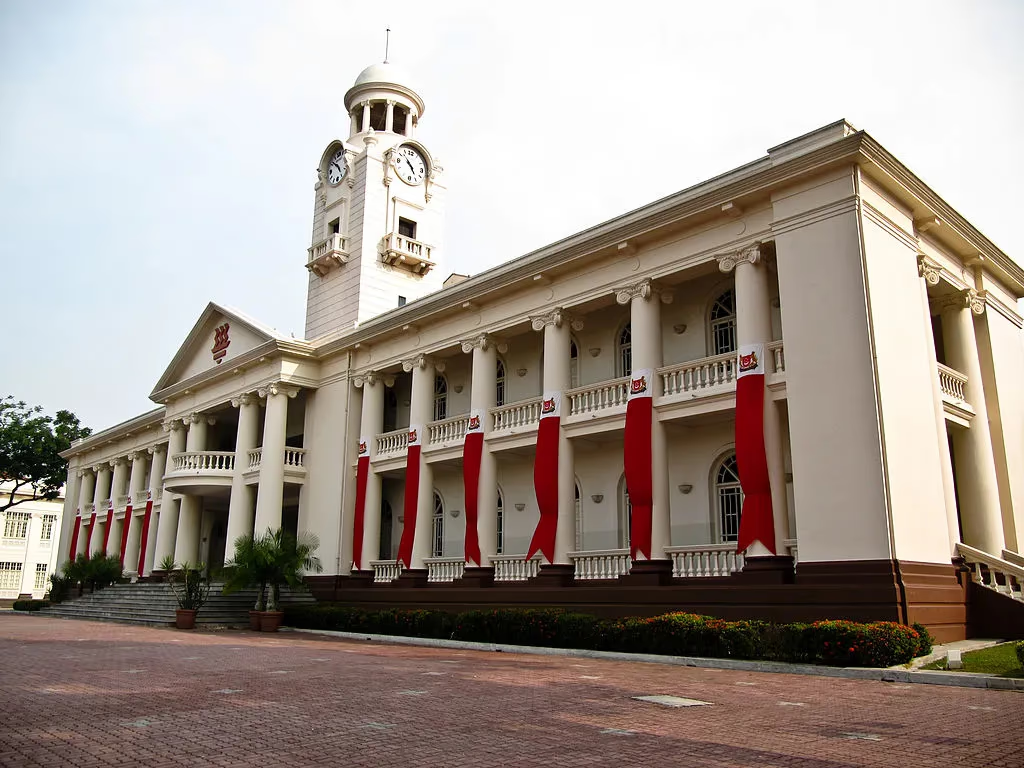
Why Were SAP Schools Created?
During Singapore’s rapid economic development in the 1970s, policymakers recognised the importance of maintaining cultural roots while preparing students for an increasingly global economy.
Many Chinese-medium schools had long traditions of academic excellence and cultural heritage. The SAP initiative helped preserve the strengths of these schools while integrating them into Singapore’s bilingual education framework.
The objectives included:
- Promoting bilingual proficiency
- Preserving Chinese cultural heritage
- Developing future leaders
- Supporting Singapore’s multicultural identity
- Encouraging strong academic achievement
This vision continues to shape SAP schools today.
List of Popular SAP Secondary Schools in Singapore
Several SAP schools consistently rank among Singapore’s most competitive and respected institutions.
| School | Type | Notable Strengths |
|---|---|---|
| Hwa Chong Institution | Independent | Academic excellence, leadership development |
| Dunman High School | Autonomous | Integrated Programme, bilingual education |
| Nanyang Girls’ High School | Independent | Strong academic and leadership programmes |
| River Valley High School | Autonomous | Integrated Programme and holistic development |
| Chung Cheng High School (Main) | Autonomous | Strong traditions and academic culture |
| Nan Chiau High School | Autonomous | Balanced academic and co-curricular focus |
| St. Nicholas Girls’ School | SAP School | Academic and character development |
| Anglican High School | Autonomous | Strong bilingual environment |
| Catholic High School | SAP School | Leadership and holistic education |
| CHIJ St. Nicholas Girls’ School | SAP School | Bilingual excellence and values education |
Each school has its own identity, strengths, and culture, making it important for families to research carefully.
What Makes SAP Secondary Schools Different?
Many schools in Singapore provide excellent academic programmes. SAP schools, however, stand out because of several distinctive characteristics.
Strong Bilingual Education
Perhaps the most significant feature is the emphasis on bilingualism.
Students are expected to maintain high proficiency in:
- English Language
- Higher Chinese Language
Lessons, activities, competitions, and enrichment programmes often reinforce both languages.
This approach helps students develop communication skills that are increasingly valuable in Asia’s interconnected economy.
Focus on Chinese Cultural Heritage
SAP schools integrate cultural education into everyday school life.
Students may participate in:
- Chinese calligraphy
- Traditional music
- Cultural immersion programmes
- Heritage projects
- Chinese literature appreciation
The objective is not merely language acquisition but cultural understanding.
High Academic Expectations
Most SAP schools attract students with strong Primary School Leaving Examination (PSLE) scores.
As a result, academic standards are generally demanding.
Students are often surrounded by highly motivated peers, creating an environment that encourages excellence.
Leadership Development Opportunities
SAP schools frequently invest heavily in leadership programmes.
Students may have opportunities to:
- Lead student councils
- Organise community projects
- Participate in international exchanges
- Represent the school in competitions
- Develop entrepreneurial initiatives
These experiences help prepare students for future academic and professional challenges.
The Benefits of Attending a SAP Secondary School
Many parents consider SAP schools because of their long-standing reputation. While reputation matters, understanding the practical benefits is even more important.
Academic Excellence
SAP schools consistently perform well in national examinations.
Strong academic cultures often result in:
- High educational standards
- Motivated peer groups
- Experienced teachers
- Robust learning support systems
Students are encouraged to aim high while developing independent learning skills.
Competitive University Preparation
The rigorous curriculum prepares students well for:
- Junior colleges
- Integrated Programme pathways
- Polytechnic education
- Overseas universities
- Local universities
Students often gain valuable skills in critical thinking, communication, and research.
Enhanced Chinese Language Skills
In today’s global economy, bilingual ability is a significant advantage.
Strong Chinese language proficiency can benefit future careers in:
- Business
- Finance
- Technology
- International relations
- Marketing
As China continues to play a major role in global commerce, bilingual graduates may enjoy additional opportunities.
Rich Cultural Experiences
Students gain exposure to traditions and perspectives that help broaden their understanding of history and culture.
Many schools organise:
- Overseas immersion trips
- Cultural festivals
- Language camps
- Heritage learning projects
These experiences contribute to a more comprehensive education.
Strong Alumni Networks
Many SAP schools have long histories and extensive alumni communities.
Graduates often remain connected through:
- Mentorship programmes
- Career networking
- Scholarships
- Community initiatives
Such networks can become valuable resources later in life.
Potential Challenges of SAP Schools
While SAP schools offer many benefits, they may not be the ideal choice for every student.
Understanding potential challenges allows families to make more informed decisions.
Demanding Chinese Language Requirements
Students typically need strong Chinese language skills before entering a SAP school.
Those who struggle with Chinese may find the curriculum challenging.
Parents should honestly assess whether their child is comfortable learning at an advanced Chinese language level.
Highly Competitive Environment
Academic excellence often comes with greater pressure.
Students may face:
- Intense competition
- High expectations
- Heavy workloads
- Challenging examinations
Some students thrive in such environments, while others may prefer a less competitive setting.
Balancing Multiple Commitments
SAP schools often provide numerous enrichment opportunities.
Although beneficial, students may need to balance:
- Academics
- Leadership roles
- Co-curricular activities
- Community service
- Personal interests
Effective time management becomes essential.
Who Should Consider a SAP Secondary School?
Not every high-performing student automatically benefits from a SAP school environment.
A SAP school may be suitable for students who:
- Enjoy learning Chinese language and literature
- Appreciate cultural activities
- Thrive in academically rigorous environments
- Have strong self-discipline
- Value bilingual education
On the other hand, students who strongly prefer alternative educational pathways may find other school types more suitable.
The best choice depends on individual interests, strengths, and learning styles.
Understanding the Admission Process
Admission to SAP secondary schools generally follows Singapore’s secondary school posting system.
Placement depends on several factors, including:
- PSLE Achievement Level score
- School choice ranking
- Available vacancies
- Specific admission criteria
Because many SAP schools are highly competitive, cut-off points can be relatively demanding.
Parents should review recent admission trends while remembering that scores vary from year to year.
Integrated Programme Opportunities
Several SAP schools offer the Integrated Programme (IP).
The IP allows academically strong students to bypass the O-Level examinations and proceed directly toward pre-university qualifications.
Benefits may include:
- Broader curriculum flexibility
- More research opportunities
- Interdisciplinary learning
- Enhanced leadership development
Popular SAP schools offering IP pathways include Hwa Chong Institution, Dunman High School, River Valley High School, and Nanyang Girls’ High School.
A Real-Life Example
Consider two students with similar academic abilities.
Student A enjoys Chinese literature, participates actively in cultural activities, and likes language learning.
Student B excels in mathematics and science but has little interest in Chinese language enrichment.
Even though both students achieve excellent PSLE results, Student A may gain greater satisfaction and engagement from a SAP school environment.
This example highlights an important truth: school fit matters as much as academic performance.
School Culture Matters More Than Rankings
Many parents focus heavily on rankings.
While rankings provide useful information, they rarely tell the full story.
When evaluating SAP schools, families should consider:
- Teaching philosophy
- Student support systems
- School values
- Co-curricular opportunities
- Campus environment
- Student wellbeing initiatives
A school’s culture can significantly influence a student’s overall experience.
Questions Parents Should Ask Before Choosing a SAP School
Before finalising school choices, consider asking:
- Does my child genuinely enjoy learning Chinese?
- Will my child thrive in a highly academic environment?
- What co-curricular activities are available?
- How does the school support student wellbeing?
- Are leadership opportunities aligned with my child’s interests?
The answers can help clarify whether a SAP school is the right fit.
Practical Tips for Students Interested in SAP Schools
Build Strong Chinese Language Foundations
Students should strengthen:
- Reading comprehension
- Writing skills
- Oral communication
- Vocabulary development
Consistent practice can make the transition smoother.
Participate in Cultural Activities
Exposure to cultural programmes can increase confidence and interest in bilingual learning.
Activities may include:
- Speech competitions
- Chinese drama
- Reading clubs
- Cultural workshops
Develop Good Study Habits Early
Strong organisational skills help students manage the demands of secondary school effectively.
Simple habits such as maintaining study schedules and reviewing lessons regularly can make a significant difference.
The Future of SAP Schools in Singapore
Singapore’s education landscape continues to evolve.
Modern SAP schools increasingly balance tradition with innovation.
Students now benefit from:
- Digital learning platforms
- Global exchange programmes
- STEM education initiatives
- Entrepreneurship opportunities
- International collaborations
This combination of cultural heritage and future-focused education helps keep SAP schools relevant in a rapidly changing world.
Are SAP Schools Only for Chinese Students?
One common misconception is that SAP schools are exclusively for Chinese students.
In reality, SAP schools welcome students from diverse backgrounds who meet admission requirements and are interested in the school’s educational approach.
While Chinese language proficiency remains important, the schools themselves support Singapore’s broader multicultural values.
This openness reflects the nation’s commitment to inclusivity and mutual cultural understanding.
Frequently Asked Questions
What does SAP stand for in Singapore schools?
SAP stands for Special Assistance Plan. These schools focus on bilingual education, particularly English and Higher Chinese, while preserving Chinese cultural heritage.
Are SAP schools difficult to enter?
Many SAP schools are highly competitive and typically require strong PSLE results because demand often exceeds available places.
Do students need to take Higher Chinese?
Most SAP schools place significant emphasis on Higher Chinese, making strong Chinese language proficiency important for success.
Are SAP schools better than non-SAP schools?
Not necessarily. The best school depends on the student’s interests, strengths, learning style, and educational goals.
Which SAP secondary schools are most popular?
Some of the most recognised SAP schools include Hwa Chong Institution, Dunman High School, Nanyang Girls’ High School, River Valley High School, Anglican High School, and Catholic High School.
Can non-Chinese students attend SAP schools?
Yes. Students from all backgrounds may attend SAP schools if they meet admission requirements and are prepared for the school’s bilingual environment.

Conclusion
SAP secondary schools in Singapore continue to hold a unique place within the nation’s education system. Their combination of academic excellence, bilingual proficiency, cultural heritage, leadership development, and holistic education makes them attractive to many families.
However, choosing a school should never be based solely on reputation. The strongest educational outcomes often occur when there is a good match between the student’s interests, strengths, and the school’s culture.
If your child enjoys language learning, appreciates cultural enrichment, and thrives in a challenging academic environment, a SAP school may provide an excellent foundation for future success. Take time to visit schools, attend open houses, speak with current students, and evaluate the overall fit before making your final decision.
The right school is not necessarily the most prestigious one—it is the one where your child can learn, grow, and flourish with confidence.
You may also like


Leave a Reply