Water Bill Singapore: Save Money & Understand Charges
Managing a water bill Singapore has become an important part of household budgeting for families, tenants, homeowners, and businesses alike. As utility prices continue to change, many residents want to understand why their monthly bill fluctuates, how water tariffs are calculated, and what practical steps can reduce overall utility costs without sacrificing comfort.
Singapore is known for having one of the most advanced water management systems in the world. The country invests heavily in desalination, imported water, NEWater recycling technology, reservoirs, and national water infrastructure. Because water production and treatment require significant investment, utility bills reflect not only water usage but also conservation policies designed to encourage responsible consumption.
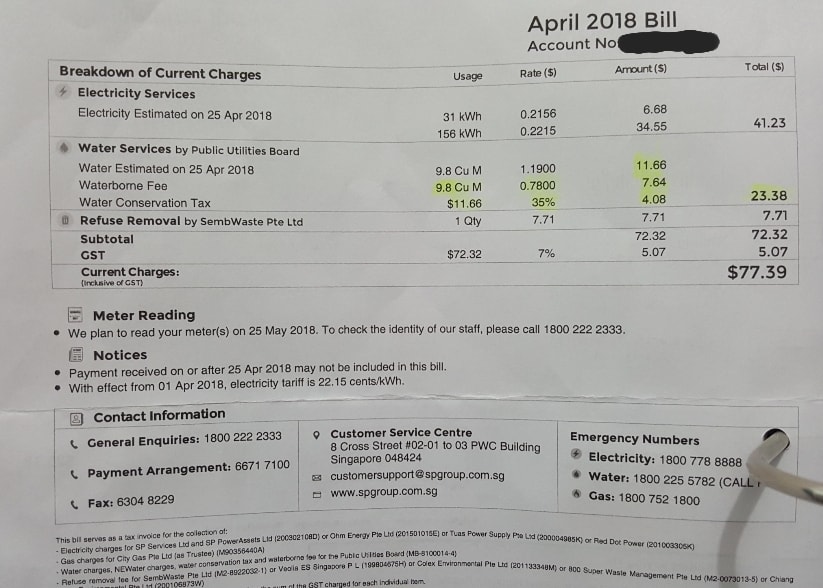
For many households, the biggest challenge is understanding the different components inside the monthly utility statement. A typical water bill in Singapore includes potable water charges, water conservation tax, sanitary appliance fees, and used water charges. Without understanding these components, consumers often struggle to identify where their money is going or how they can reduce expenses.
This guide explains everything in a simple and practical way. You will learn how water charges are calculated, what affects monthly costs, average utility spending in Singapore, ways to save money, payment methods, common billing issues, and strategies that help lower consumption over time.
Understanding the Singapore Water Billing System
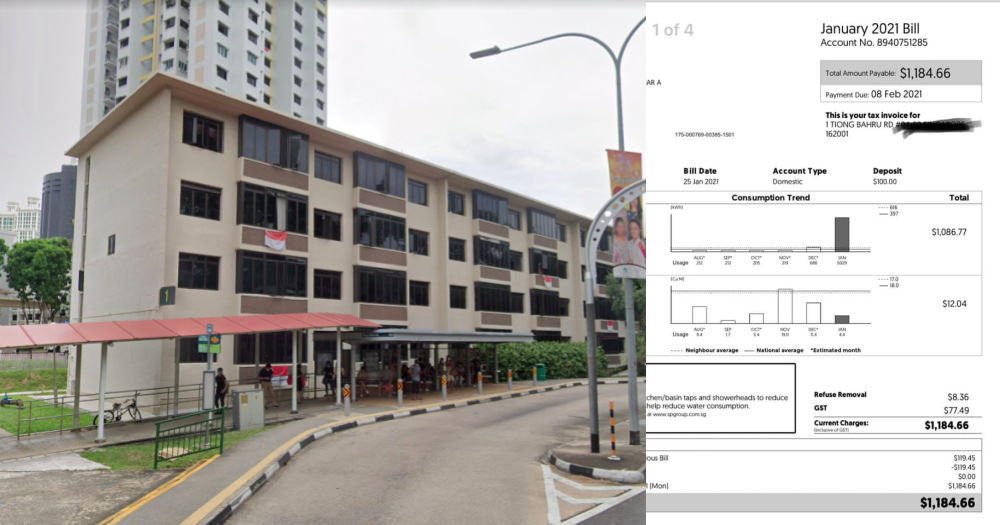
Singapore’s water billing structure is designed around both consumption and sustainability. Unlike many countries where utility pricing only covers supply costs, Singapore’s system also encourages long-term conservation and infrastructure maintenance.
The monthly water bill generally combines several separate charges into one utility statement. These include water usage fees, taxes related to conservation, and wastewater treatment charges. Since the country treats water as a valuable and limited resource, pricing policies are structured to prevent excessive consumption while supporting national water security initiatives.
Households usually receive a consolidated utility bill every month or every two months, depending on the billing cycle. Residents living in HDB flats, condominiums, landed properties, and rental units may notice differences in billing amounts based on household size, appliance efficiency, and lifestyle habits.
Several factors influence total monthly costs:
- Number of residents in the household
- Daily shower duration
- Washing machine frequency
- Dishwasher use
- Toilet flushing systems
- Water-efficient appliances
- Irrigation or gardening needs
- Leakage problems
- Air-conditioning systems using water cooling
Singapore also uses tiered pricing concepts indirectly through conservation-focused charges. This means higher consumption leads to significantly higher overall costs over time.
For residents trying to reduce monthly utility spending, understanding the structure behind the bill is the first and most effective step.
What Is Included in a Water Bill Singapore Statement?
A Singapore utility bill contains multiple cost components rather than a single water charge. Many consumers only focus on the final payable amount without understanding what contributes to it.
Here are the major components commonly found in a household water bill:
| Bill Component | Purpose |
|---|---|
| Water Tariff | Basic cost of supplied drinking water |
| Water Conservation Tax | Encourages responsible water usage |
| Used Water Fee | Covers wastewater treatment and reclamation |
| Sanitary Appliance Fee | Maintenance of sanitation infrastructure |
| GST | Consumption tax applied to utilities |
The water tariff is the core charge for clean water supplied to homes and businesses. This pricing reflects production, desalination, purification, storage, and distribution costs.
The water conservation tax plays an important role in Singapore’s environmental policy. Since the country has limited natural water resources, conservation remains a national priority. The tax encourages residents to become more mindful about long showers, leaking taps, and unnecessary wastage.
Used water fees cover the cost of treating wastewater before it is recycled or safely discharged. Singapore operates one of the most advanced water recycling systems globally, and these treatment facilities require continuous investment.
Consumers often underestimate how much leakage contributes to utility bills. A dripping faucet or leaking toilet can waste thousands of liters annually, increasing both water and wastewater charges simultaneously.
Understanding each component allows residents to identify where reductions are possible instead of simply blaming tariff increases.
Average Water Bill in Singapore for Different Households
The average water bill in Singapore varies depending on property type, household size, and consumption habits. Smaller households living in compact apartments naturally consume less water than larger families occupying landed properties.
Below is a general estimate of monthly household water expenses:
| Household Type | Estimated Monthly Water Bill |
|---|---|
| Single occupant apartment | SGD 20–40 |
| Couple in HDB flat | SGD 40–70 |
| Family of four | SGD 70–120 |
| Large family household | SGD 120–200+ |
| Landed property | SGD 200+ |
These estimates can fluctuate significantly depending on lifestyle patterns. Homes with bathtubs, frequent laundry cycles, water-intensive cooking habits, or gardening systems often see higher utility costs.
Air-conditioning systems can also indirectly affect utility spending in some residential setups. Older systems may require more maintenance and create additional water-related inefficiencies.
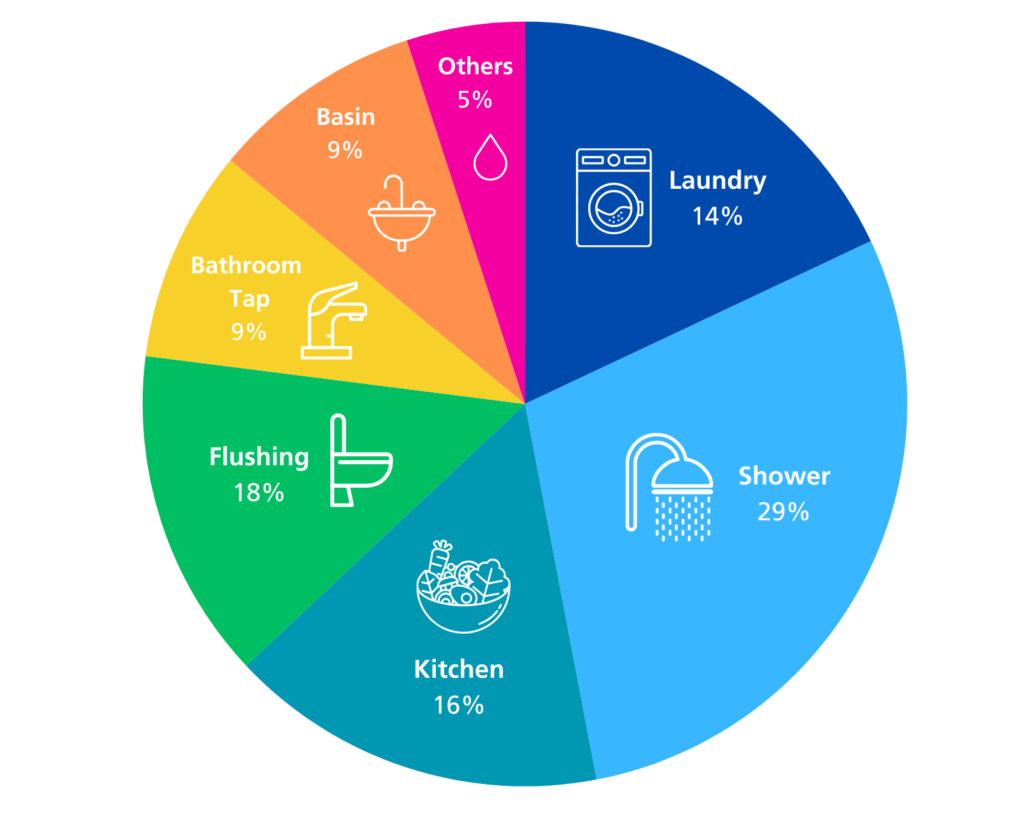
One important observation in Singapore is that utility-conscious households often reduce their bills substantially through small behavioral changes. A family reducing shower time by just two minutes per person daily can save meaningful amounts annually.
Seasonal habits also influence bills. Hotter months usually increase shower frequency, laundry loads, and cooling-related water use.
Residents who actively monitor consumption trends generally experience lower long-term utility expenses than households that ignore monthly billing patterns.
How Water Tariffs Are Calculated in Singapore
Water tariffs in Singapore are carefully structured to reflect the actual cost of water production and national sustainability goals. Unlike countries with abundant freshwater reserves, Singapore invests heavily in water independence through imported water agreements, desalination, stormwater collection, and recycled NEWater systems.
The pricing structure considers:
- Water sourcing costs
- Treatment infrastructure
- Energy consumption
- Pipe maintenance
- Reservoir systems
- Water recycling technology
- Environmental sustainability planning
Water treatment in Singapore is highly sophisticated. Desalination plants and advanced recycling systems consume significant energy, making production costs higher compared to regions with abundant natural freshwater supplies.
The government also uses pricing as a behavioral tool. By making excessive consumption more expensive over time, households are encouraged to adopt conservation habits.
Water-efficient appliances now play a major role in reducing costs. Washing machines, dishwashers, dual-flush toilets, and low-flow showerheads can noticeably reduce monthly bills without affecting comfort levels.
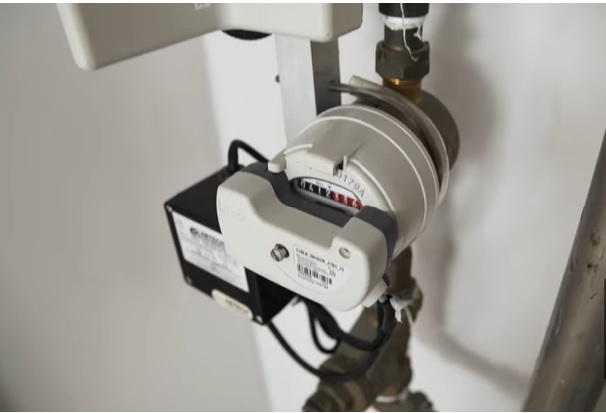
Smart metering technologies are also becoming more common. These systems allow residents to monitor usage patterns in real time, making it easier to detect unusual spikes caused by leaks or excessive usage.
Consumers who understand tariff structures are better positioned to make informed decisions regarding appliance upgrades and daily water habits.
Common Reasons Your Water Bill Is Suddenly Higher
A sudden increase in your Singapore water bill can be frustrating, especially when daily habits appear unchanged. In many cases, the issue is linked to unnoticed household inefficiencies rather than pricing changes alone.
One of the most common causes is hidden leakage. Toilet leaks are especially problematic because they can waste large amounts of water silently over several weeks. Residents often only discover the issue after receiving an unusually high bill.
Other common causes include:
- Guests or temporary occupants
- Increased laundry frequency
- Faulty washing machines
- Irrigation system leaks
- Long showers during hot weather
- Running taps while cleaning
- Increased cooking activities
- Water heater malfunctions
Older plumbing systems inside aging residential buildings may also contribute to inefficiency. Corroded pipes and outdated fittings can gradually increase wastage.
Another overlooked issue is appliance age. Older washing machines and dishwashers generally consume more water than newer efficient models. Upgrading appliances may involve an upfront cost but often reduces long-term utility expenses substantially.
Families with children typically experience fluctuating utility bills depending on school holidays and time spent at home.
Monitoring meter readings regularly helps identify unusual patterns early before costs escalate significantly.
Best Ways to Reduce Your Water Bill in Singapore
Reducing your water bill does not require drastic lifestyle changes. In Singapore, small adjustments often produce meaningful savings over time because utility charges combine several related fees.
One of the simplest methods is shortening shower duration. A reduction of even two to three minutes per shower can significantly lower monthly consumption in larger households.
Other highly effective strategies include:
Install Water-Efficient Fixtures
Low-flow showerheads and tap aerators reduce water usage while maintaining strong pressure. Modern fixtures are designed to provide comfort without excessive wastage.
Upgrade Old Appliances
Older washing machines and dishwashers often use far more water than energy-efficient models. Choosing appliances with strong water efficiency ratings helps reduce monthly costs.
Fix Leaks Immediately
Even minor leaks can waste thousands of liters annually. Regular inspections of toilets, faucets, and under-sink plumbing help prevent unnecessary charges.
Run Full Laundry Loads
Using washing machines only when fully loaded reduces both water and electricity consumption.
Use Dual-Flush Toilets
Dual-flush systems allow users to select lower water usage for liquid waste, significantly reducing overall household consumption.
Track Monthly Usage
Monitoring utility trends helps households identify spikes early before they become expensive long-term problems.
Reduce Outdoor Watering
For landed properties, garden irrigation can become a major contributor to utility bills. Watering during cooler hours minimizes evaporation loss.
Households that consistently follow these habits often see noticeable reductions within a few billing cycles.
Water Conservation and Singapore’s Sustainability Goals
Singapore treats water conservation as a national responsibility rather than simply a household budgeting issue. The country’s long-term sustainability strategy focuses heavily on reducing dependence on imported water while increasing self-sufficiency.
This approach explains why water pricing policies are closely linked to conservation objectives.
Singapore invests in four primary water sources commonly known as the “Four National Taps”:
- Imported water
- Local catchment water
- Desalinated water
- Recycled NEWater
NEWater technology has become one of Singapore’s most internationally recognized achievements. Recycled wastewater undergoes advanced purification processes before being reused for industrial and potable purposes.
Because desalination and advanced purification are energy-intensive, conservation remains economically important.
Public awareness campaigns also encourage residents to adopt water-saving habits through educational initiatives, appliance labeling systems, and smart usage recommendations.
Sustainability goals increasingly influence housing design as well. New residential developments often include water-efficient systems, rainwater harvesting solutions, and environmentally conscious infrastructure.
Consumers who understand the bigger picture behind water pricing often become more motivated to reduce unnecessary wastage.
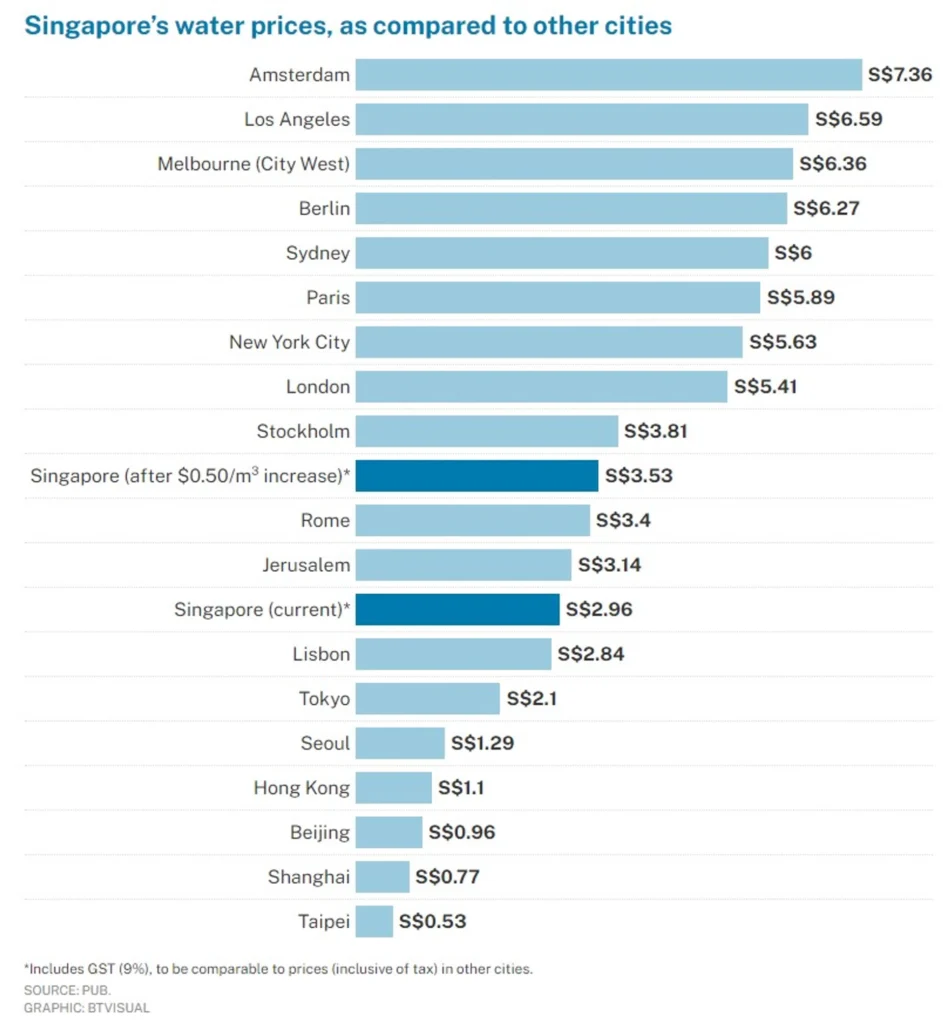
Comparing Singapore Water Costs With Other Countries
Singapore’s water prices are often perceived as high compared to some neighboring countries, but direct comparisons can be misleading because infrastructure quality and sustainability investments differ significantly.
Many countries rely heavily on natural freshwater reserves, rivers, or lakes with relatively low treatment costs. Singapore, however, lacks abundant natural freshwater sources and depends on advanced technologies to secure long-term supply reliability.
Here is a general comparison:
| Country | Relative Water Cost |
|---|---|
| Singapore | Moderate to high |
| Malaysia | Lower |
| Australia | Moderate |
| United Kingdom | Moderate to high |
| Japan | Moderate |
| United States | Varies by state |
While Singapore residents may pay more than some regional neighbors, they benefit from highly reliable water quality, minimal supply disruptions, and world-class sanitation systems.
The country’s integrated water management model is often studied internationally as a benchmark for urban sustainability.
Consumers should therefore view utility pricing not only as a household expense but also as part of a broader national investment in water security.
Payment Methods for Water Bills in Singapore
Singapore offers multiple convenient payment options that simplify bill management for residents.
Common payment methods include:
- GIRO automatic deduction
- Mobile banking apps
- Internet banking
- Credit cards
- Debit cards
- AXS stations
- Digital wallets
- Utility mobile applications
Automatic payment systems are popular because they reduce the risk of late fees and service interruptions.
Digital billing has also become more common, helping residents track monthly consumption trends more efficiently.
Many households now use budgeting applications to monitor recurring utility expenses alongside electricity and internet costs.
Keeping digital payment records can also help tenants and landlords resolve disputes regarding utility responsibilities more easily.
Smart Home Technology and Water Monitoring
Smart home technology is changing how Singapore households manage water consumption. Advanced monitoring systems now provide real-time insights into usage patterns, leak detection, and appliance efficiency.
Popular smart water management tools include:
- Leak detection sensors
- Smart water meters
- Mobile consumption tracking apps
- Automated irrigation controls
- Water-efficient appliance monitoring
These technologies help residents identify hidden wastage quickly before utility costs rise dramatically.
For larger households and landed properties, smart systems can generate substantial long-term savings by optimizing irrigation schedules and detecting underground leaks early.
Many environmentally conscious homeowners also combine smart monitoring with sustainable lifestyle practices such as rainwater collection for gardening purposes.
As utility costs continue evolving, smart monitoring solutions are becoming increasingly attractive for cost-conscious households.
Renting in Singapore: Who Pays the Water Bill?
For tenants renting property in Singapore, responsibility for utility payments depends on the rental agreement.
In many cases:
- Tenants pay monthly utilities separately
- Some landlords include utilities in rent
- Shared apartments may split costs equally
- Co-living arrangements may use fixed utility contributions
Before signing any rental contract, tenants should clarify:
- Utility payment responsibilities
- Billing frequency
- Deposit arrangements
- Shared consumption calculations
- Payment deadlines
Disputes sometimes arise when bills increase unexpectedly due to additional occupants or excessive appliance use.
Keeping transparent utility records helps avoid misunderstandings between landlords and tenants.
Frequently Asked Questions
Why is my water bill so high in Singapore?
High water bills are usually caused by increased household usage, leaking fixtures, outdated appliances, longer showers, or additional occupants in the home. Hidden toilet leaks are one of the most common reasons for sudden bill increases.
What is the average water bill for a family in Singapore?
A family of four typically spends around SGD 70 to SGD 120 monthly depending on property type, lifestyle habits, and appliance efficiency.
How can I reduce my water bill quickly?
Shortening shower time, fixing leaks, running full laundry loads, and installing water-efficient fixtures are among the fastest ways to reduce utility expenses.
Does Singapore have expensive water?
Singapore’s water prices are considered moderate to high due to advanced treatment systems, desalination, recycling infrastructure, and long-term water security investments.
How often are water bills issued in Singapore?
Most households receive utility bills monthly or bi-monthly depending on their service arrangement and billing cycle.
Do tenants pay water bills in Singapore?
In many rental agreements, tenants are responsible for utility bills unless the landlord specifically includes utilities within the rental payment.
Can smart devices reduce water bills?
Yes. Smart meters and leak detection systems help identify wastage early, allowing households to reduce unnecessary consumption.
You may also like

Leave a Reply