
Foreign Business in Singapore: 9 Powerful Easy Wins
Starting a foreign business in Singapore used to feel like something only giant corporations could pull off. Big budgets. Expensive lawyers. Endless paperwork. But things have changed fast. And honestly, that’s one of the biggest reasons entrepreneurs from all over the world keep moving their operations to Singapore every year.
If you’ve been thinking about expanding internationally, setting up a startup overseas, or simply entering a stable Asian market, Singapore probably keeps showing up in your research. There’s a reason for that. The country offers low corporate taxes, a transparent legal system, world-class banking, easy company registration, and a business environment that actually supports growth instead of slowing it down.
A foreign business in Singapore can be launched surprisingly quickly if you understand the process. You don’t need to be a permanent resident. You don’t even need to live there initially. In many cases, foreign founders can register a company remotely through a corporate service provider and begin operating within days. That sounds almost unreal at first… but it’s true.
And there’s another thing many people don’t talk about enough. Singapore isn’t only attractive for large tech companies. Small agencies, ecommerce brands, consultants, logistics businesses, SaaS startups, and even solo founders are building profitable operations there. The ecosystem is flexible. That matters a lot when you’re entering a new market.

This guide breaks everything down in a practical way. No complicated legal language. No vague advice. Just a real look at how a foreign business in Singapore works, what it costs, what mistakes to avoid, and how you can position your company for long-term growth.
What Is a Foreign Business in Singapore?
A foreign business in Singapore simply means a company owned fully or partly by non-Singapore residents that operates legally within Singapore. The owner could be an individual entrepreneur, an overseas corporation, or a group of investors looking to enter the Asian market. And unlike many countries where foreign ownership becomes messy or heavily restricted, Singapore is surprisingly open to international business activity.
That openness is one of the reasons Singapore consistently ranks among the easiest places in the world to do business. Foreign founders can own 100% of a Singapore private limited company in many industries. There’s no mandatory local shareholder requirement in most standard business sectors. That alone removes a huge barrier for international entrepreneurs.
The most common structure used for a foreign business in Singapore is the Private Limited Company, often called a Pte Ltd company. It’s popular because it separates personal and business liabilities while also giving tax advantages and stronger credibility with banks and investors. For startups planning future fundraising, this structure usually makes the most sense.
Some foreign companies also choose to open a branch office or representative office. But those setups work differently. A branch office is legally tied to the parent company overseas, which means liabilities can flow back to the original business. A representative office, meanwhile, cannot generate direct revenue and is mainly used for market research or early-stage exploration.
Singapore also makes company incorporation efficient. The registration process is digital, fast, and relatively affordable. In many situations, incorporation can happen within one to three days after documents are approved. Compare that with countries where registration drags on for months and you’ll immediately see the appeal.
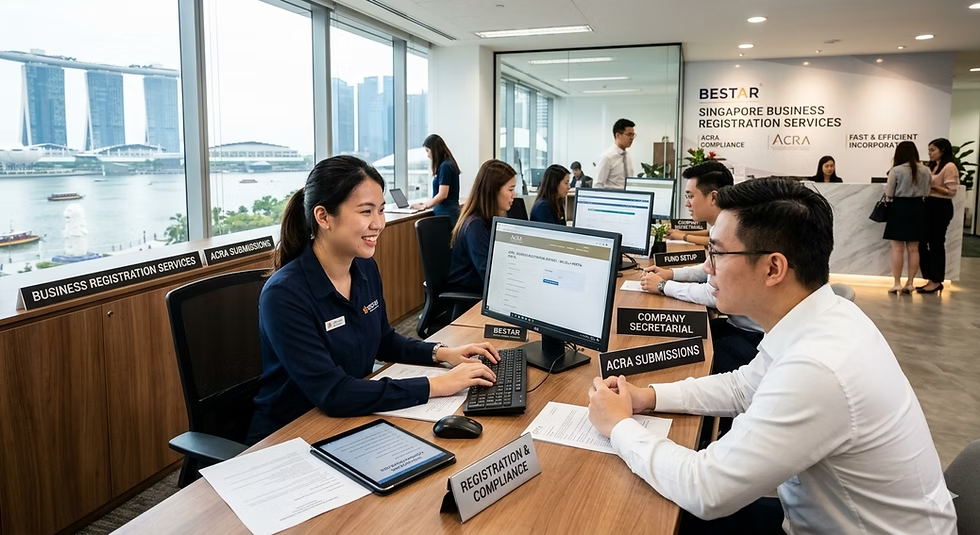
Another reason the foreign entrepreneur Singapore ecosystem is thriving comes down to trust. Investors trust the legal system. Banks trust the compliance framework. International clients trust Singapore-based businesses because the country has built a reputation for stability and professionalism. That trust has real financial value.
You’ll also notice that Singapore acts as a gateway to Southeast Asia. Businesses operating there often expand later into Malaysia, Indonesia, Vietnam, Thailand, and the Philippines. So for many founders, establishing a foreign business in Singapore is not only about one country. It’s about regional access.
And yes, there are compliance requirements. You’ll need a local company secretary, annual filings, accounting records, and corporate compliance management. But compared to many international jurisdictions, the system feels straightforward once you understand the basics.
Why Foreign Business in Singapore Matters for Global Entrepreneurs
There’s a reason multinational corporations and small startups both want a foreign business in Singapore. The country has managed to create something many governments struggle with — a business environment that feels stable, efficient, and growth-focused at the same time.
Let’s start with taxes because that’s usually the first thing entrepreneurs look at. Singapore’s corporate tax rate is competitive, and startups may qualify for tax exemptions during their early years. There’s also no capital gains tax in most situations. For foreign investors and founders trying to maximize profitability, that becomes a major advantage.
But taxes alone don’t build a successful business ecosystem.
Singapore has built a strong reputation for legal transparency. Contracts are enforceable. Corruption levels are low. Regulations are clearly defined. That matters more than people realize. When entrepreneurs move into unstable legal systems, uncertainty increases operating costs. In Singapore, businesses can focus more on growth instead of constantly worrying about regulatory chaos.
The banking system is another huge factor. Opening a Singapore business banking account gives companies access to globally respected financial institutions and smoother international transactions. Many ecommerce brands, fintech startups, consultants, and digital businesses prefer Singapore because clients and partners often view Singaporean banking as highly credible.
And then there’s geography.
Singapore sits in one of the most strategically valuable locations in the world. Companies can access major Asian markets quickly while operating from a stable headquarters. Logistics businesses especially benefit from this setup because Singapore’s shipping and transport infrastructure is world-class.
A foreign business in Singapore also benefits from strong internet infrastructure, modern coworking ecosystems, skilled talent pools, and government-backed innovation programs. Startups in tech, AI, cybersecurity, biotech, logistics, and finance continue growing rapidly there.
The workforce matters too. Hiring employees in Singapore is often easier than in neighboring countries because of the highly educated labor market. English is widely used in business communication, which removes another barrier for international founders.
And honestly… reputation matters.
When clients see “Singapore” attached to a business, it creates a perception of professionalism and operational reliability. That branding effect can help companies attract partnerships, investors, and customers faster than expected.

There are challenges, of course. Office costs can be high. Competition is intense in certain industries. Compliance deadlines must be respected carefully. But overall, the benefits of doing business in Singapore still outweigh the downsides for many foreign entrepreneurs.
That’s why thousands of new companies continue registering there every year.
Types of Business Structures for Foreign Companies
Choosing the right structure for your foreign business in Singapore matters more than many founders expect. A bad structure can create tax inefficiencies, legal complications, and banking problems later on. So before registration, it’s worth understanding the major options available.
The most common choice is the Private Limited Company. This is usually the preferred structure for foreign startups, ecommerce brands, agencies, consultants, and growing businesses. A private limited company in Singapore operates as a separate legal entity, meaning your personal assets stay protected from company liabilities in most situations.
This structure also gives flexibility for adding investors later. Venture capital firms and angel investors typically prefer investing in private limited companies because the governance structure feels familiar and scalable. If your long-term goal includes fundraising, expansion, or acquisition opportunities, this setup usually works best.
Then there’s the Branch Office option.
A branch office allows an overseas parent company to operate directly in Singapore without forming an entirely separate company. Some multinational corporations prefer this because they want centralized global control. But there’s a catch — the branch office is legally connected to the foreign parent company. So liabilities and risks can potentially flow upward.
Representative offices are another option, though they’re limited. These offices are mainly designed for foreign corporations exploring the Singapore market before making a full investment. They cannot engage in direct profit-making activity. So while they’re useful for market research, networking, and relationship building, they aren’t ideal for serious commercial operations.
Sole proprietorships exist too, but they’re generally less attractive for foreign entrepreneurs because they lack liability protection and scalability. Most international founders skip this route entirely.
One thing many entrepreneurs overlook is nominee director requirements. Singapore companies typically need at least one locally resident director. Foreign founders often use nominee director services provided by incorporation firms until they secure an employment pass or relocate themselves.
And speaking of visas, many founders planning long-term involvement apply for an Employment Pass. This allows business owners to work legally in Singapore while managing their operations directly. Approval depends on factors like salary, qualifications, and business viability.
Foreign investor Singapore regulations are generally business-friendly, but some sectors may require additional licenses or approvals. Financial services, education, healthcare, and import/export businesses often face extra compliance obligations.
The right structure depends on your goals. If you want credibility, scalability, tax efficiency, and investor readiness, a private limited company remains the strongest option for most foreign businesses in Singapore.
How to Register a Foreign Business in Singapore
The process of setting up a foreign business in Singapore is much simpler than people expect. In fact, many entrepreneurs finish incorporation faster than opening a business bank account in their own country. But speed only helps if you understand the steps properly.
The first step is choosing your business structure and company name. Singapore’s Accounting and Corporate Regulatory Authority, commonly known as ACRA, handles company registration. Your chosen name must be unique and not violate trademark or restricted naming rules. Usually, approval happens quickly unless additional review is needed.
Next comes appointing directors and shareholders. Foreigners can own 100% of the company shares in most industries. However, Singapore law generally requires at least one local resident director. This could be a Singapore citizen, permanent resident, or Employment Pass holder. Many foreign founders initially use nominee director services during setup.
You’ll also need a registered local address and a company secretary. The company secretary requirement often surprises foreign entrepreneurs, but it’s mandatory for compliance and corporate filings.
After that, incorporation documents are submitted. These typically include passport copies, proof of residential address, company constitution documents, and shareholder details. If documents are prepared correctly, registration may be completed within one to three business days.
Opening a corporate bank account comes next. This step can sometimes take longer because banks perform strict compliance checks. Different banks have different onboarding requirements, especially for foreign owned company Singapore setups. Some founders travel to Singapore for account opening meetings, although remote options are increasingly available with digital banking providers.
You’ll also need to understand tax registration obligations. If annual revenue exceeds the GST threshold, your company may need Goods and Services Tax registration. Businesses must maintain accounting records and submit annual tax filings.

For entrepreneurs planning to relocate, securing a Singapore business visa for foreigners becomes important. The Employment Pass is one of the most common options for company founders and executives. There’s also the EntrePass route for innovative startups in specific industries.
One smart move many entrepreneurs make is hiring a Singapore business incorporation service. These firms handle compliance paperwork, nominee director arrangements, company secretary services, and registration support. While it adds some cost upfront, it can save time and reduce costly filing mistakes later.
The overall cost of starting business in Singapore varies depending on business type, licensing requirements, office setup, and service providers. Lean digital startups can begin relatively affordably, while regulated industries naturally require larger budgets.
Still, compared to many international business hubs, Singapore remains surprisingly accessible for serious foreign entrepreneurs.
Costs, Taxes, Banking, and Daily Operations
Running a foreign business in Singapore isn’t free from expenses, but the financial structure is usually predictable — and that predictability matters. Business owners hate uncertainty more than high costs. Singapore’s system is transparent, which helps founders plan growth properly.
The initial company registration itself is relatively affordable. Government registration fees are low compared to many Western countries. However, foreign entrepreneurs often use professional incorporation services, nominee directors, accounting providers, and compliance firms, which adds to startup expenses.
A realistic starting budget for a small foreign business in Singapore may range between a few thousand dollars and significantly more depending on industry requirements. Tech startups operating remotely may stay lean, while retail businesses, logistics firms, or companies needing office space face higher operating costs.
Office rent can become one of the largest expenses. Singapore commercial property prices are not cheap. That said, many startups initially use coworking spaces or virtual office services to reduce overhead during the early stage.
Now let’s talk taxes — because this is where Singapore becomes extremely attractive.
Singapore corporate tax rates remain competitive globally, and startup tax exemption schemes can reduce tax burdens further during the first few years. There’s also no dividend tax in many situations and no capital gains tax for most businesses. For international founders trying to scale efficiently, these advantages matter a lot.
The Singapore tax system for foreign businesses is also supported by strong international tax treaties. This helps companies avoid double taxation in many jurisdictions, making cross-border operations smoother.
Banking is another huge reason entrepreneurs choose Singapore.
A Singapore corporate bank account gives businesses access to stable financial infrastructure and easier international payments. Traditional banks remain popular, but many founders now also use fintech banking platforms for faster onboarding and global transfers.

Daily operations are generally efficient. Internet connectivity is excellent. Government services are digitized. Payment systems work smoothly. Shipping infrastructure is world-class. These small operational details save businesses enormous time over the long run.
Hiring employees in Singapore can be more expensive compared to neighboring countries, but businesses often gain productivity and reliability in return. The talent pool is highly educated and internationally experienced.
Accounting and compliance requirements should not be ignored, though. Annual filings, bookkeeping, tax submissions, and corporate governance rules must be handled properly. Missing deadlines can result in penalties. That’s why many foreign businesses in Singapore work with accounting firms or outsourced compliance providers.
Overall, the financial ecosystem is designed to support serious business activity rather than create unnecessary friction. And honestly, once entrepreneurs experience that efficiency, many never want to return to slower systems elsewhere.
Best Industries and Opportunities for Foreign Business in Singapore
Not every industry performs equally well in Singapore. Some sectors are exploding with opportunity while others face tighter competition or higher barriers. Understanding where the momentum exists can help your foreign business in Singapore grow faster.
Technology remains one of the strongest sectors. SaaS companies, fintech startups, AI businesses, cybersecurity firms, and software consultancies continue expanding rapidly. Singapore actively supports innovation through grants, startup incubators, and investor networks. It has become one of Asia’s strongest tech hubs.
Ecommerce is another major opportunity.
Singapore consumers are highly digital, and the country acts as a logistics gateway for Southeast Asia. Many international sellers establish operations there to serve nearby markets efficiently. Fast shipping infrastructure and reliable payment systems make scaling easier for online brands.
Financial services also remain powerful. Wealth management, fintech innovation, payment processing, blockchain development, and investment services continue attracting global attention. But financial businesses may face stricter licensing requirements, so founders need proper legal guidance before entering the market.
Consulting businesses perform well too. Marketing agencies, recruitment firms, IT consultants, and business advisory services often thrive because international companies entering Asia need specialized expertise.
Healthcare and biotech sectors are growing steadily as well. Singapore invests heavily in medical innovation and research infrastructure, creating opportunities for health-focused startups and international partnerships.
Education businesses also have potential, especially in professional training, language learning, online education, and executive coaching. Singapore’s reputation for educational quality creates strong demand in these areas.
And surprisingly, sustainability-focused businesses are gaining serious traction. Green technology, renewable energy solutions, environmental consulting, and ESG-focused services continue receiving increasing attention from investors and government initiatives.
Still, competition exists.
A foreign startup Singapore strategy needs clear positioning. Simply entering the market without differentiation rarely works anymore. The businesses succeeding today usually focus on solving specific problems, targeting underserved niches, or building strong regional expansion plans.
Many entrepreneurs also underestimate relationship-building in Asia. Networking matters. Partnerships matter. Local trust matters. Businesses that invest time into connections often grow faster than those relying only on digital marketing.
One advantage Singapore offers is access to investors. Venture capital firms, private equity groups, and angel networks actively operate there. Startups with scalable business models may find stronger fundraising opportunities compared to smaller regional markets.
So if you’re wondering whether there’s still room for growth, the answer is yes. But smart positioning matters more than ever.
Foreign Business in Singapore vs Other Countries
Entrepreneurs comparing international expansion destinations often ask the same question: why choose Singapore instead of Dubai, Hong Kong, the UK, or the United States?
The answer depends on business goals, but Singapore consistently stands out for balance.
Dubai offers tax advantages and strong regional positioning for Middle Eastern operations, but Singapore often wins in regulatory transparency and Asian market access. Hong Kong used to dominate international business discussions in Asia, but geopolitical concerns have caused some businesses to diversify toward Singapore instead.
Compared to the United States, Singapore offers faster incorporation, lower bureaucracy, and simpler international structuring for many foreign founders. The US market remains huge, obviously, but operational complexity and tax obligations can overwhelm smaller international startups.
The UK remains attractive for finance and global branding, yet Singapore often provides stronger access to Southeast Asia’s rapidly growing economies. For businesses targeting Asian consumers, Singapore becomes strategically valuable in ways London simply cannot replicate.
Another major difference is efficiency.
Government systems in Singapore are digitized and business-friendly. Administrative tasks that take weeks elsewhere may take hours there. That efficiency compounds over time and saves companies enormous operational stress.
Singapore also ranks highly for safety, infrastructure quality, internet reliability, and political stability. These factors might seem secondary initially, but they become critically important once companies begin scaling internationally.
Of course, Singapore isn’t perfect.
Living costs are high. Commercial rents are expensive. Competition can be intense in saturated industries. Some businesses targeting ultra-low operating costs may choose neighboring countries instead while maintaining Singapore headquarters for credibility and strategic management.
Still, for many entrepreneurs, the trade-off feels worth it.
A foreign business in Singapore gains international credibility, strong banking access, investor confidence, and strategic regional positioning. Few countries manage to combine all those advantages so effectively.
Expert Tips and Common Mistakes to Avoid
One of the biggest mistakes foreign entrepreneurs make when building a foreign business in Singapore is assuming the market is “easy” simply because incorporation is fast. Setting up a company is easy. Building a profitable operation still requires strategy, consistency, and local understanding.
First, don’t ignore compliance.
Many founders focus heavily on sales and expansion while forgetting annual filings, bookkeeping, or tax obligations. Singapore regulators take compliance seriously. Work with a reliable accounting or corporate secretarial firm from the beginning instead of trying to fix problems later.
Another common mistake is weak market research. Some businesses enter Singapore assuming Western marketing tactics will automatically work in Asia. Consumer behavior can differ significantly. Localization matters. Pricing expectations differ. Communication styles differ too.
And don’t underestimate networking.
Relationships still drive many opportunities in Singapore business culture. Attend events, join entrepreneur communities, connect with investors, and build partnerships intentionally. Some of the best business growth opportunities happen through referrals and introductions rather than ads.
Foreign founders also sometimes spend too much too early. Fancy office spaces, oversized teams, and unnecessary branding expenses drain capital fast. Start lean whenever possible. Test the market before scaling aggressively.
Banking preparation is another overlooked issue. Singapore banks perform detailed compliance checks. Prepare clean documentation, transparent ownership structures, and clear business activity explanations before applying. Delays often happen because entrepreneurs submit incomplete information.
If you’re planning regional expansion, build that strategy early. Singapore works best as a hub for Southeast Asia. Businesses that think regionally often outperform businesses focusing only on Singapore’s domestic market.
One smart strategy is partnering with local experts. Legal advisors, tax consultants, hiring specialists, and incorporation providers can prevent expensive mistakes. Yes, professional support costs money. But fixing errors later usually costs far more.
And here’s something many successful founders quietly understand — patience matters.
Singapore rewards consistency and professionalism. Businesses that build trust steadily often create stronger long-term positioning than companies chasing rapid shortcuts.
If you’re serious about launching a foreign business in Singapore, focus on operational quality from day one. Build systems properly. Stay compliant. Understand the market deeply. And don’t rush every decision just because the setup process itself moves quickly.
FAQs About Foreign Business in Singapore
Can a foreigner own 100% of a business in Singapore?
Yes. In many industries, foreigners can fully own a Singapore private limited company without needing a local shareholder.
Do I need to live in Singapore to start a company?
No. Many foreign entrepreneurs register companies remotely using incorporation service providers and nominee director arrangements.
How long does Singapore company registration take?
If documents are prepared correctly, incorporation can often be completed within one to three business days.
What is the best business structure for foreigners?
The Private Limited Company structure is usually the best option because it provides liability protection, credibility, and tax advantages.
Is Singapore expensive for startups?
It depends on the industry. Office rent and salaries can be high, but digital businesses can often start lean and scale gradually.
Can I get a visa through my Singapore company?
Yes. Many founders apply for an Employment Pass or EntrePass to live and work in Singapore legally.
Are Singapore taxes low for foreign businesses?
Singapore offers competitive corporate tax rates and startup tax incentives, making it attractive for international entrepreneurs.
Final Thoughts
A foreign business in Singapore offers something many entrepreneurs struggle to find elsewhere — stability without stagnation. The country moves fast, supports innovation, welcomes international founders, and provides a strong platform for regional expansion.
But success there isn’t automatic.The businesses that thrive are usually the ones that combine smart planning with long-term thinking. They stay compliant, understand local market behavior, build strong networks, and scale carefully instead of chasing shortcuts.
If you’re considering international expansion, Singapore deserves serious attention. Whether you’re building a startup, opening a consulting agency, launching an ecommerce brand, or expanding an existing company into Asia, the opportunities are real.
And the timing still makes sense.
Competition continues increasing, yes. But so does regional demand, investment activity, digital adoption, and international trade growth. Entrepreneurs entering now still have room to build strong positions if they move strategically.
If you’re ready to start your foreign business in Singapore, this is the moment to research properly, prepare your structure carefully, and take the first step. Explore incorporation services, speak with local advisors, compare banking options, and begin building a plan that fits your goals.
The market rewards action — especially when that action is informed.
You may also like



Leave a Reply